In foundation drilling, many contractors pay close attention to the brand of the rotary drilling rig, the torque rating, and the drilling tool. But one part is often underestimated until the project starts: the kelly bar length and kelly bar section design.
A Kelly bar may look like a simple telescopic steel structure, but it directly controls how deep a rig can drill, how smoothly torque is transferred, and how efficiently the operator can complete each drilling cycle. If the bar is too short, the rig cannot reach the required depth. If it has too many sections, stability may decrease and wear may increase. If the section configuration does not match the rig mast, Kelly box, drilling tool, or soil condition, the contractor may face slow drilling, poor telescoping, excessive vibration, or unnecessary downtime.
At JM, we often see customers begin with a simple question: “What is the price of this Kelly bar?” But in most real projects, the better question is: “What length and section configuration should this Kelly bar have for my rotary drilling rig and target drilling depth?”
That difference matters. A correct kelly bar length and kelly bar sections design can improve rotary drilling rig efficiency, protect the machine, reduce maintenance pressure, and increase the real drilling depth capacity of the complete system.
Kelly Bar Length Is Not Just a Number
When a customer asks for a 40 m, 50 m, or 60 m Kelly bar, the number alone does not fully describe the real drilling capability. The actual drilling depth depends on the complete system: the rig mast height, working radius, crowd system, overpull allowance, drilling tool length, section overlap, and operational safety margin.
This is where many purchasing mistakes happen. A buyer may assume that a longer Kelly bar automatically means greater drilling depth. In practice, the bar must still fit the rotary drilling rig. The mast must have enough height. The winch and crowd system must support the movement. The Kelly bar must telescope smoothly without reaching an unsafe working position. The drilling tool must also be considered, because the bucket, auger, or core barrel adds length below the bar.
If these details are ignored, the customer may receive a Kelly bar that looks correct on paper but performs poorly on site. The rig may struggle during lifting. The operator may need extra handling time during each cycle. The bar may not reach the expected depth safely. In worse cases, the equipment may experience higher wear because it is constantly working outside its ideal range.
For this reason, JM treats kelly bar length as an engineering decision, not only a sales specification.
How Kelly Bar Sections Affect Drilling Depth Capacity
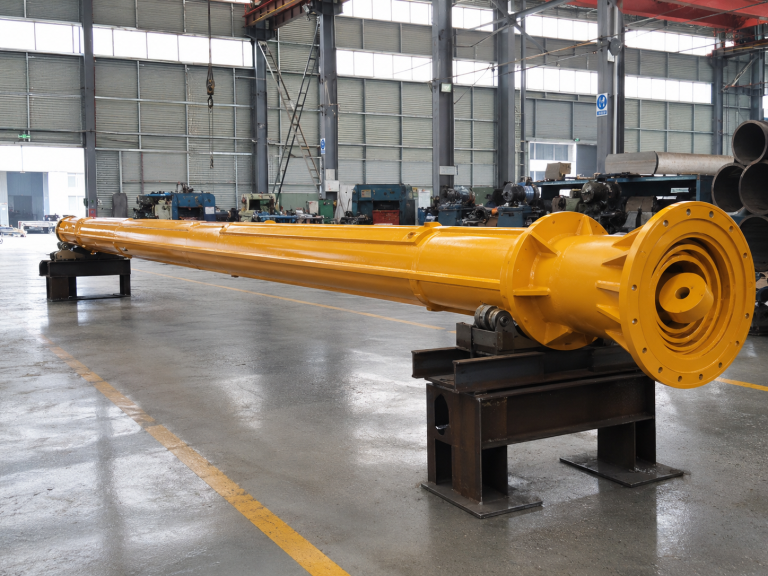
A Kelly bar reaches depth through telescopic sections. The number of sections—3-section, 4-section, 5-section, or more—directly affects drilling depth capacity, machine stability, and operating efficiency.
More sections can increase the maximum drilling depth because each section extends from the previous one. This is useful for deep piles and projects that require greater reach. However, more sections also mean more contact surfaces, more locking points, more sliding areas, and more potential wear zones. If the rig is not suitable for that configuration, the system can become less stable.
Fewer sections usually provide better rigidity and smoother operation, but the maximum depth is more limited. For some projects, a shorter and stronger Kelly bar may actually produce better daily output than a longer bar that pushes the rig beyond its comfortable operating window.
This is why the ideal kelly bar section design is not simply “the more sections, the better.” It is a balance between target depth, rig capability, soil resistance, drilling tool type, and jobsite efficiency.
For example, a contractor using a medium-class rotary drilling rig for urban foundation work may not need the deepest possible Kelly bar. A well-matched 4-section bar may deliver better stability and faster cycle time. But a contractor drilling deep piles in mixed soil or dense layers may require a longer interlocking Kelly bar with carefully designed locking geometry and reinforced wear areas.
The correct decision depends on the project, not the catalogue.
The Hidden Cost of Wrong Kelly Bar Configuration
A mismatched Kelly bar usually does not fail immediately. That is why the problem is easy to underestimate during procurement. The bar may arrive looking strong and well-painted. It may even fit the rig physically. But after several days or weeks of work, the hidden problems become clear.
The operator may notice that telescoping is not smooth. Locking may feel delayed or unstable. The bar may vibrate under torque. Outer sections may wear faster than expected. The rig may require more fuel because drilling efficiency drops. The crew may spend more time adjusting, cleaning, and checking the bar instead of drilling.
These problems all reduce rotary drilling rig efficiency.
In foundation projects, cost is not only the purchase price of the Kelly bar. The real cost includes fuel, labor, maintenance, spare parts, idle time, and delayed progress. A cheaper but poorly matched bar may become more expensive than a correctly designed customized Kelly bar.
That is why JM always recommends customers to evaluate Kelly bar length and section design together with the full drilling system: rig model, target depth, pile diameter, soil condition, drilling tool, Kelly box size, and expected working schedule.
Interlocking or Friction: Section Design Depends on Ground Conditions
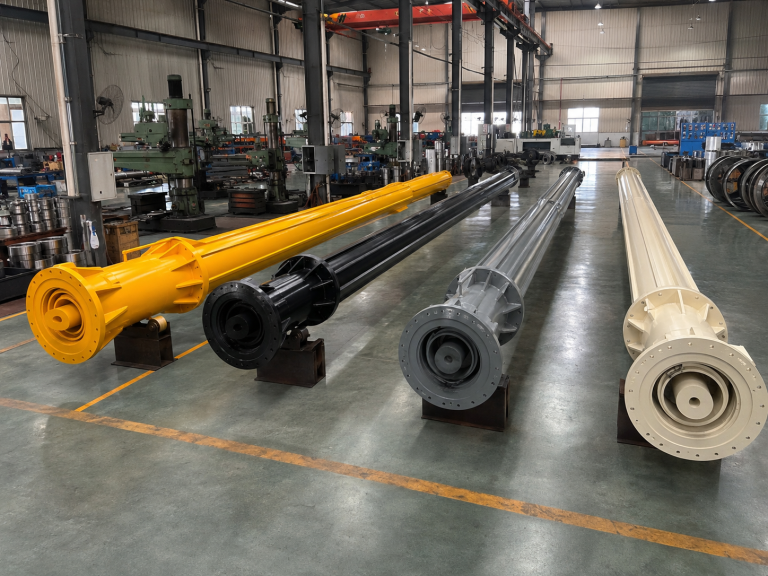
The choice between interlocking Kelly bar and friction Kelly bar also affects length and section configuration.
A friction Kelly bar is usually suitable for softer soil, cleaner sand, and projects where drilling resistance is moderate. It can be lighter and efficient when the ground does not require strong mechanical locking at each section.
An interlocking Kelly bar, also searched by many customers as a full locking Kelly bar, is designed for more demanding ground. When drilling in mixed strata, dense sand, gravel, weathered rock, or harder layers, the rig needs more reliable torque transfer. In these conditions, the locking system becomes essential.
However, a longer interlocking Kelly bar must be designed carefully. Each locking section must engage properly. The lock structure must be accurate. The pressure plates, key strips, and guide areas must withstand repeated load cycles. The more sections the bar has, the more important precision becomes.
A long Kelly bar with poor locking design can create vibration and impact. A well-designed one can help the rig drill deeper, more steadily, and with less unnecessary wear.
This is one of JM’s key manufacturing focuses: matching kelly bar sections and locking design to the actual drilling condition, not simply producing a long bar for the sake of length.
Kelly Bar Layout Must Match the Rig, Not Just the Required Depth
Many customers focus only on the required drilling depth, but a good kelly bar layout must also match the rig itself.
Different foundation drilling equipment has different mast heights, torque output, crowd force, main winch capacity, Kelly box dimensions, and operating characteristics. Even if two rigs have similar drilling depth ranges, their ideal Kelly bar configuration may not be the same.
For customers using XCMG, SANY, ZOOMLION, BAUER, or other platforms, JM checks the machine model and drive connection before confirming the final design. For customers using a used rotary drilling rig or second-hand rotary drilling rig, this step is even more important. Used rigs may have modified drive heads, worn components, or operating differences compared with factory specifications.
A Kelly bar that fits the model name may still not fit the actual machine condition. That is why photos, drawings, Kelly box measurements, and existing bar references are valuable before production.
At JM, we prefer to solve this before manufacturing, not after delivery.
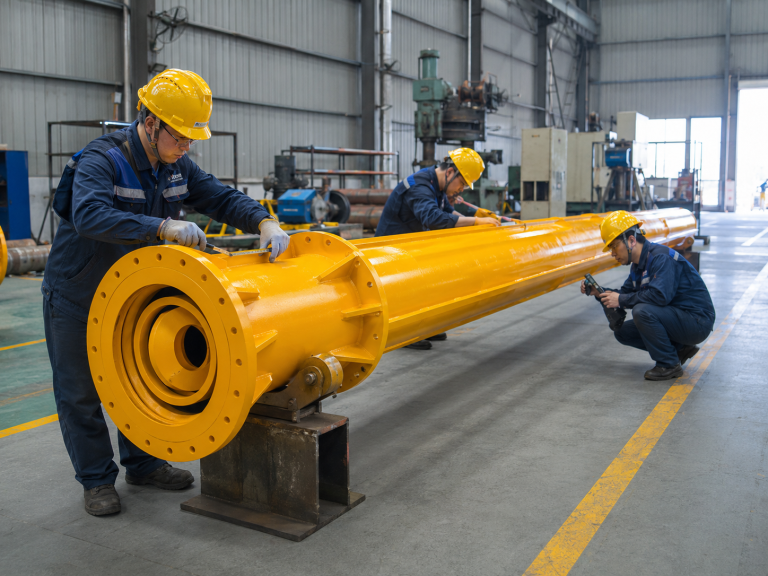
How JM Helps Customers Choose the Right Kelly Bar Length and Sections
JM’s advantage is not only production capacity. Our value comes from combining Kelly bar manufacturing, rig matching, drilling tool understanding, spare parts planning, and export delivery experience.
When a customer asks for a Kelly bar, we usually ask for several key details: rotary drilling rig brand and model, target drilling depth, pile diameter, soil condition, Kelly box size, preferred drilling tool, destination country, and whether the rig is new or used. These details help us recommend a more accurate kelly bar length and kelly bar section design.
For some customers, the best solution is not the longest possible bar. It may be a more stable bar with fewer sections and stronger torque transfer. For others, especially deep foundation projects, a longer multi-section interlocking Kelly bar may be necessary, but it must be supported by correct locking design, wall thickness, and guide structure.
JM can produce customized Kelly bars, interlocking Kelly bars, friction Kelly bars, and full locking Kelly bars for different drilling rigs and project conditions. We also support customers who need drilling tools, spare parts, used drilling rig matching, or one-stop foundation drilling equipment solutions.
Our goal is simple: help customers avoid wrong matching, reduce downtime, and improve cost per meter drilled.
A Better Kelly Bar Decision Starts Before the Order
A Kelly bar should not be selected only by length or price. It should be selected by system matching.
The right question is not only “How many meters is this Kelly bar?”
The right question is: “Can this Kelly bar help my rotary drilling rig reach the required depth efficiently, safely, and repeatedly?”
That is the difference between a product purchase and a project solution.
For customers who are searching for kelly bar length, rotary drilling rig efficiency, kelly bar sections, drilling depth capacity, foundation drilling equipment, interlocking Kelly bar, friction Kelly bar, full locking Kelly bar, customized Kelly bar, rotary drilling rig, drilling rig, drilling tool, piling machine, or foundation machine, JM can provide more than a quotation. We can help you understand which configuration actually fits your machine and jobsite.
Before your next Kelly bar order, share your rig model, target depth, pile diameter, ground condition, and current drilling problems with us. A short technical conversation can prevent a costly mismatch.
At JM, we manufacture Kelly bars. More importantly, we help customers build drilling systems that work better in real conditions.