Rotary Drilling Rigs and Kelly Bars for Southeast Asia’s Tropical Job Sites

When people talk about Southeast Asia, they usually think about tropical beaches and dense cities. Contractors think about something else first: heat, humidity, and difficult ground. From Jakarta to Ho Chi Minh City, from Kuala Lumpur to Manila, foundation contractors are drilling bored piles in weather that is hot all year, with monsoon rains that can turn a clean pile hole into a problem in minutes.

XCMG recently shared a case of the XR210I rotary drilling rig working on a housing project in South Asia. The rig had to deal with high temperature, high humidity, and clay that stuck to the drilling tools so badly that operators usually had to stop and clean after each cycle. In that project, the XR210I’s dedicated power head improved soil removal speed enough to avoid constant cleaning stops. At the same time, its hydraulic and electrical systems supported a tight “drilling–grouting” rhythm during the rainy season, so freshly drilled pile holes did not get ruined by rainwater flowing back in. In one shift, the rig completed eight piles with 750 mm diameter and 9 m depth, and the local customer praised both the efficiency and the after-sales support.

Stories like this match what our customers in Indonesia, Vietnam and Malaysia tell us as well. Jiuman Kelly bars and refurbished XCMG rotary drilling rigs have already been used on projects in those countries, including internal-locking Kelly bars such as JS377-4×6 in Indonesia, JS377-4×8 in Vietnam, JS406-4×15 in Malaysia, and refurbished XR240E and XR360E rigs exported to Vietnam, Indonesia and other markets.

This article is written from our point of view at Xuzhou Jiuman Machinery Technology Co., Ltd., a Kelly bar manufacturer and rotary drilling rig supplier based in Xuzhou, China. We want to share how we think about tropical jobsites in Southeast Asia, how we design and ship interlocking Kelly bars, friction Kelly bars and refurbished rotary drilling rigs for those conditions, and how we support customers long after equipment leaves our 10,000 ㎡ facility.
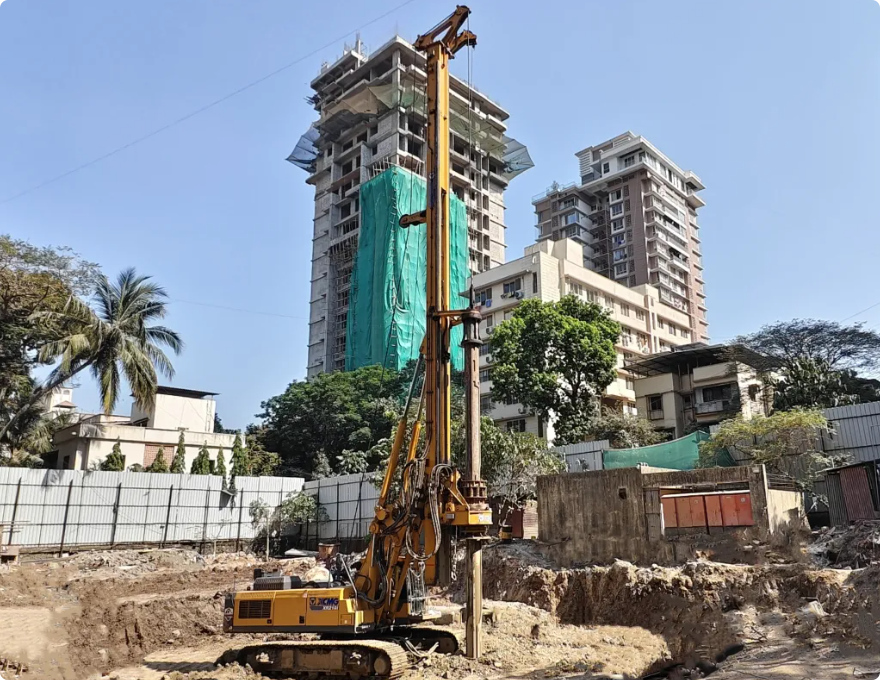
JM refurbished XR210l, Jakarta, Indonesia

1. Tropical reality: high temperature, sticky clay and sudden rain

Walk onto a piling site in Jakarta or Ho Chi Minh City at two in the afternoon and the first thing you feel is the heat coming off the ground. The second is the humidity. Anything metal sweats. Operators sweat. Controls and sensors must live in air that never really dries. When drilling, that same environment changes the behavior of soil and slurry.

In many coastal and river-delta cities in Southeast Asia, the ground profile mixes soft clays, silts, sand lenses and sometimes old fill. High-viscosity clay tends to stick to the drilling tools, Kelly bar and rotary drive, forming layers that must be removed again and again. XCMG’s XR210I case describes exactly this problem: each time soil was removed, the bit and tools needed cleaning, extending the time of a single pile and putting pressure on the schedule.

Then there is rain. During the rainy season, heavy showers can come in fast. If grouting or concreting is not started soon after drilling, rainwater can flow back into the open hole. XCMG notes that in such conditions, a pile can become useless if water inflow is not controlled. Their solution in that project relied on reliable hydraulics and controls to move directly from drilling to grouting without delay.

From Jiuman’s perspective, these two realities—sticky soil and sudden rain—drive many decisions we make about Kelly bar design, refurbishment standards for XR-series rigs, and even how we package and ship equipment to Southeast Asia.

2. The rig is the heart; the Kelly bar is the arm

Manufacturers like XCMG put a lot of engineering into rigs such as XR210I, XR240E, XR360E, XR400 and other rotary drilling rigs. Dedicated power heads, optimized hydraulic systems and intelligent control give contractors the torque, crowd force and drilling speed they need for housing projects, metro lines and bridges.

But at the end of that system is a mechanical component that has to carry all the torque and weight into the ground: the Kelly bar. In tropical jobsites this bar is exposed to hot slurry, abrasive sand, and sometimes corrosive coastal air. A powerful rig with a weak bar is like a strong body with a tired arm; it will never reach its real production potential.

That is why Jiuman chose early on to focus on precision-engineered Kelly bars instead of trying to manufacture everything. Our daily work is to design and build interlocking Kelly bars for rock and large diameters and friction Kelly bars for medium soils, then adapt them to rigs from XCMG, SANY, Zoomlion, BAUER and other brands that are common in Southeast Asia.
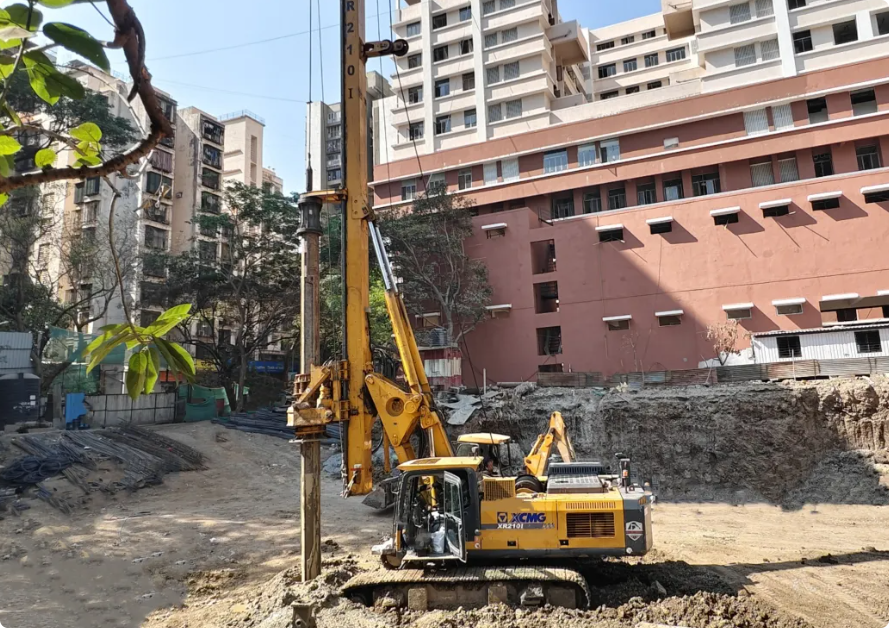
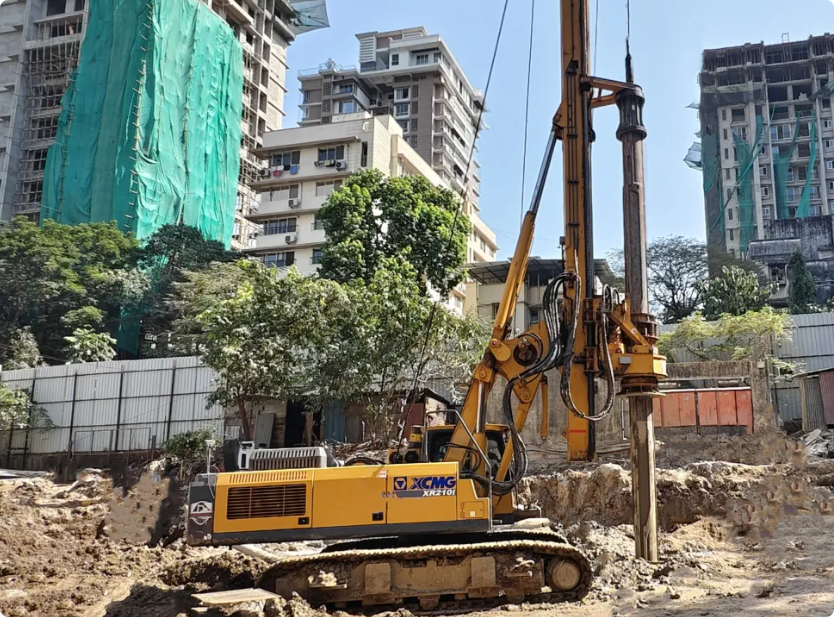
 

JM refurbished XR210l, Jakarta, Indonesia

3. Designing Kelly bars that behave well in hot, sticky ground

For tropical regions we look closely at a few parts of the bar:

Lock geometry and pressure plates.
In sticky clay, operators often feather the controls to avoid shock loads when locking and unlocking. If the lock tooth profile and pressure-plate design are not right, they will feel either awkwardly stiff or too loose. We design our JS-series interlocking Kelly bars with lock geometry that engages decisively but allows the operator to feel what is happening. Pressure plates and their contact surfaces are treated as consumable but critical parts; we supply pressurized plates and lock-related spares as part of most Southeast Asian orders so customers can keep the lock feeling crisp. 

Key strips and wear protection.
In hot climates, the combination of sand in the slurry and high drilling speed wears on key strips, guides and outer tube surfaces. Jiuman uses high-quality materials and controlled welding to give key strips enough hardness without making them brittle. Wear plates on the outer section and key areas are positioned based on our field experience in Indonesia, Vietnam and Malaysia, where our JS377, JS406, JS419, JS508 and JS559 bars have been working on bridges, offices and high-rise projects. 

Torsional stiffness and straightness.
The heat itself does not damage steel, but long bars at high torque in mixed ground will always try to twist and bow. Our 10,000 ㎡ plant is set up with large-scale processing equipment to control the straightness and concentricity of the tubes before welding. That matters when you are drilling in soft ground over stiffer layers; a bar that stays straight will telescope smoothly instead of “walking” in the hole. 

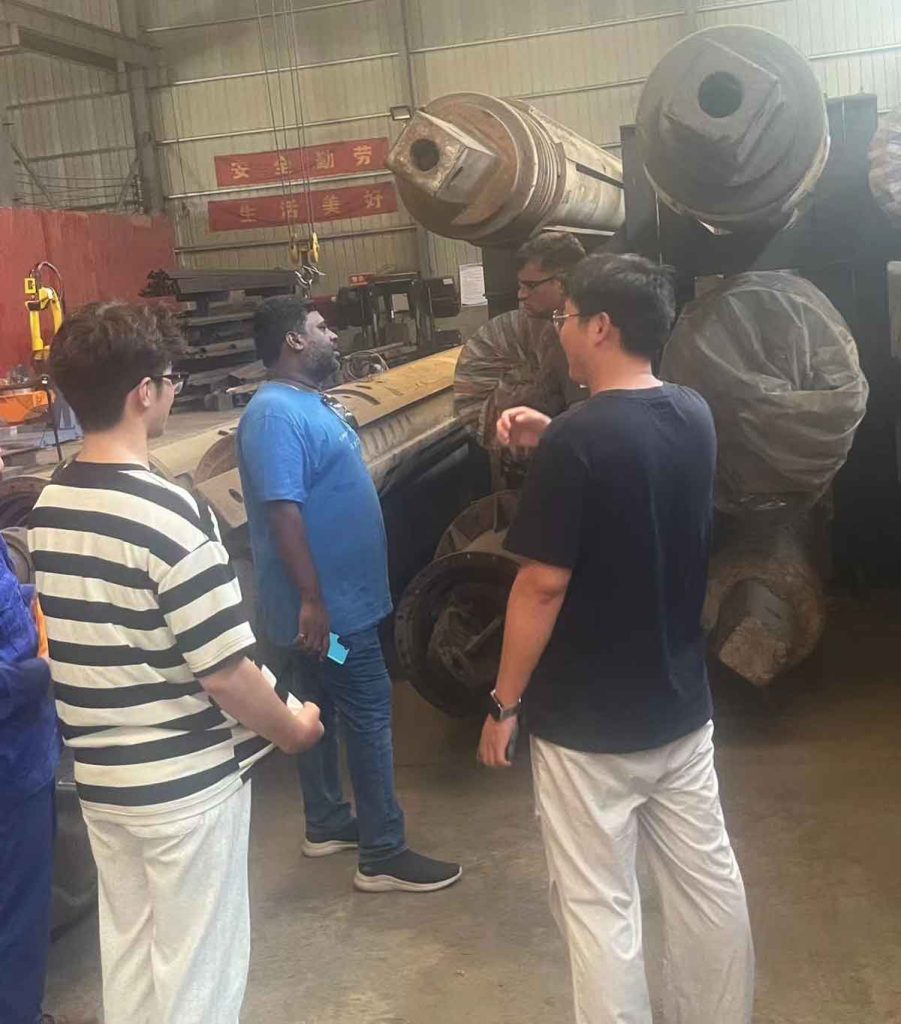
Before any bar leaves the factory, we simulate full-stroke telescoping and lock engagement on our testing stands. This is where we feel whether it “breathes” properly—no hidden tight spots, no strange noises, no uneven resistance. When a bar is destined for Southeast Asia and will be paired with an XR240E or XR360E, we run the test at the torque levels and stroke patterns those rigs are known for. 

4. Refurbished XR-series rigs matched with new Kelly bars

Many contractors in Southeast Asia like to combine refurbished rotary drilling rigs with new Kelly bars to balance capital cost and reliability. On Jiuman’s cases page you can see XR240E and XR360E renovation machines exported to countries such as Vietnam, UAE, Algeria and Indonesia, often working side by side with new Jiuman Kelly bars. 

A refurbished rig has to be treated as a system: engine, hydraulics, electrical, mast, rotary, crowd and undercarriage all need to be measured, inspected and brought back into balance. Once that is done, we match the rig with a Kelly bar whose torque and length window suits both the local geology and the project’s pile geometry. Some rigs go out with JS406-4×10 or JS406-4×15 interlocking bars suited for 30- to 40-meter piles; others use JS419 or JS508 for demanding rock sockets. 

This pairing is particularly important in tropical housing and infrastructure projects, where schedules are tight and there is not always a backup rig on the same site. When we export a refurbished XR360E rotary drilling rig with a Jiuman bar to Indonesia, for example, we think not only about torque and depth but also about local service: which spare parts should travel with the rig, how to stock slewing bearings, pressure plates, wire rope and strongly coiled springs, and what kind of remote support the client’s crews might need during the first month.

JM refurbished XR210l, Jakarta, Indonesia

Most of our Southeast Asian shipments go through Shanghai Port, Lianyungang or Qingdao, then sail toward ports like Jakarta, Surabaya, Ho Chi Minh City, Hai Phong, Klang, Penang, Manila and others, depending on the forwarder. We use the same four-layer packaging and front/rear steel frames with rubber pads that we described in detail in our April 2025 blog: inner films to protect the primer, bubble wrap to absorb shocks, a tarpaulin to keep out water, and rigid frames that hold the bar steady and present clear lifting points for the receiving yard.For tropical destinations this matters even more, because containers often sit in very hot, humid yards before customs clearance. A bar that is poorly wrapped can arrive already showing rust spots or coating damage. We want our customers to unwrap a Jiuman bar and see a clean surface, ready to work with no “transport scars”.

5. Service mindset: not just shipping steel overseas

Southeast Asian contractors often tell us that what they value most from Chinese suppliers is response. Machines break down everywhere. What changes the result is how fast somebody answers the phone, whether spare parts are in stock, and whether the supplier’s engineers understand the jobsite reality.

Jiuman’s Comprehensive Support System was set up with this in mind. We provide expert technical consultation on equipment selection, site condition analysis and tailored technical solutions; 24/7 after-sales support via hotline and remote tools; and a genuine parts supply chain with pre-stocking and emergency channels.

For customers running XR-series rigs with Jiuman Kelly bars in Southeast Asia, this support usually takes a few practical forms:

  • reviewing ground information and pile design to suggest interlocking or friction Kelly bars and stage configurations;

  • helping match used excavators and auxiliary equipment from our inspected stock to create a full foundation package; 

  • designing a spare parts kit that travels with the bar or rig, including pressure plates, key strips, locking components and critical hydraulic or structural parts;

  • planning maintenance windows around local holidays and monsoon patterns, so major overhauls do not conflict with the busiest production weeks.

This is not a theory. Our service team has visited job sites from Indonesia to Pakistan and supported clients by phone, video and in person. The details vary, but one rule stays constant: any recommendation we make must be practical on that specific site, not just correct on paper.

6. What tropical customers look for in a Kelly bar manufacturer

When engineers and project managers in countries like Indonesia, Vietnam, Malaysia, Thailand and the Philippines contact us about Kelly bars or refurbished rotary drilling rigs, the conversations often start with similar questions:

Will this interlocking Kelly bar really match my XCMG XR360E or BAUER BG rig? How quickly can you ship kelly bar spare parts if we hit unexpected rock? How many projects like this have you supplied before?

Our answer is based on what we can prove. As of 2025, Jiuman operates from a 10,000 ㎡ manufacturing base and supplies equipment to more than 15 countries and regions, including overseas Kelly bar projects in Indonesia, Vietnam and Malaysia and XR-series refurbishment exports to Vietnam, UAE, Algeria and Indonesia

We share photos, case descriptions and sometimes operator comments from similar jobs, and we are honest about what each bar type can and cannot do. For example, we make clear that friction Kelly bars are excellent for medium soils with longer pile lengths but are not the first choice for hard rock sockets; in those cases a JS-series interlocking Kelly bar matched with a rig like XR240E or XR360E is more appropriate. We do not try to push one solution for every site, because in tropical markets word of mouth travels faster than any brochure.


7. Learning from XCMG’s tropical case and extending it with Jiuman’s role

The XCMG XR210I housing-project case in South Asia is a good demonstration of what a modern rotary drilling rig can achieve in hot, humid, clay-heavy ground: higher soil removal speed, reduced downtime for cleaning, and a seamless “drilling–grouting” operation under heavy rainfall. 

Our role as a Kelly bar manufacturer and refurbishment partner is to make sure that when customers run rigs like XR210I, XR240E or XR360E on similar projects in Southeast Asia, the mechanical link between the rig and the ground—the Kelly bar and its accessories—is just as reliable. That means tuned lock geometry, robust key strips, well-protected coatings, careful packaging, properly matched spare parts and a service team ready to respond when conditions change.

When those pieces line up, tropical complexity becomes manageable. A contractor in Indonesia can plan a schedule with realistic per-pile times; a Vietnamese metro project can keep up with its tunnel and station deadlines; a Malaysian bridge contractor can work through the rainy season without losing piles to water inflow.

In other words, high-quality rotary drilling rigs, Kelly bars and support are a single system. XCMG’s engineering at the rig level and Jiuman’s focus on Kelly bars and refurbishment complement each other in Southeast Asia’s demanding environment.

8. Talk to us about your Southeast Asian project

If you are planning foundation piling in Indonesia, Vietnam, Malaysia, Thailand, the Philippines or other tropical markets, and you are working with XCMG rotary drilling rigs or mixed fleets from SANY, Zoomlion and BAUER, we are ready to help. Share your rig models, target pile diameters and depths, typical ground profile and schedule constraints. We will suggest interlocking or friction Kelly bars, potential refurbished rotary drilling rig options, and a spare parts and support plan that fits the way you actually work.

滚动至顶部