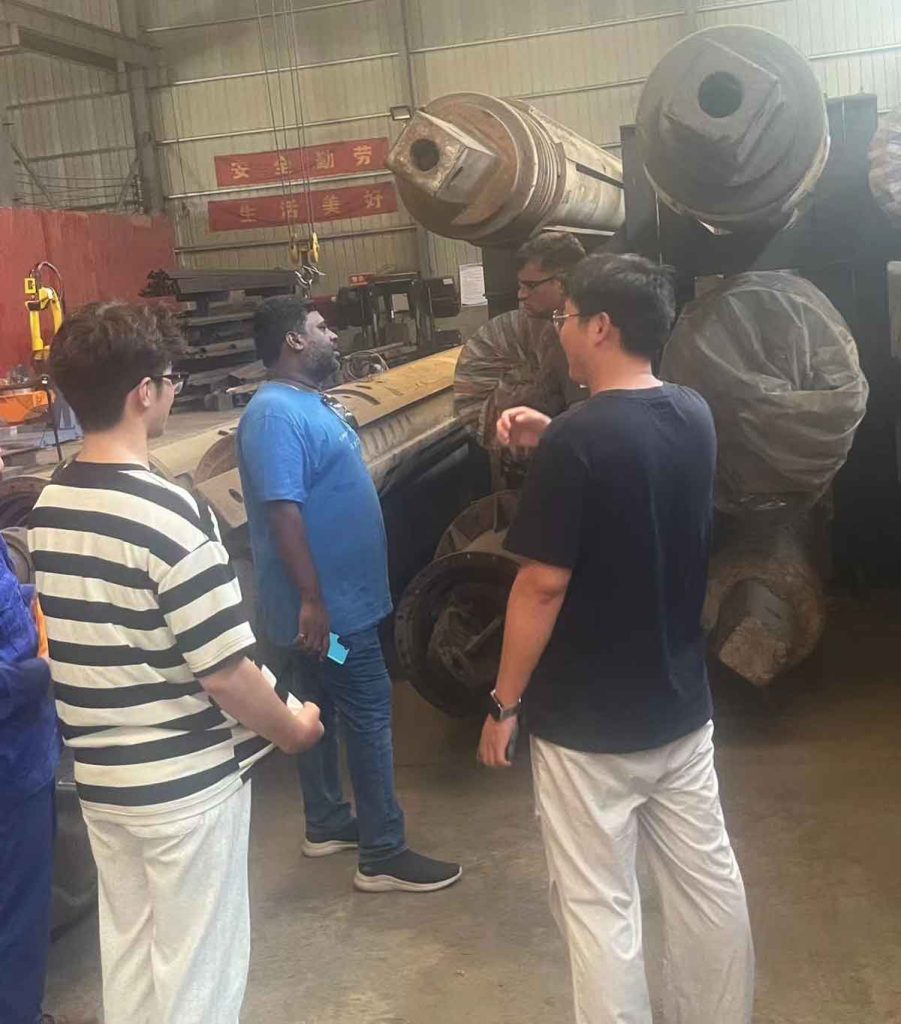
A good Kelly bar does two things on site: it locks cleanly and it telescopes smoothly. Those behaviors are defined by geometry and material, but they survive the journey only if the bar is packed and handled correctly. April is a busy export month for us, with interlocking Kelly bars, friction Kelly bars, and matched spare parts heading to foundation projects in different climates. This post explains—without shortcuts—how we prepare a bar for ocean freight and why our four-layer package is the quiet reason customers receive equipment that works on day one.
We write this from the perspective of a manufacturer of Kelly bars and a service team that also refurbishes rotary drilling rigs and supports commissioning. The audience is mixed: purchasing teams who care about Incoterms and ports, project managers who care about arrival dates, and site engineers who care about the condition of the bar when the rig first spins. If you are searching for terms like interlocking Kelly bar, friction Kelly bar, kelly bar manufacturer, foundation piling equipment, SANY/XCMG/ZOOMLION/BAUER compatible, drive adapters, pressure plates, key strips, or double retaining rings, you are in the right place.
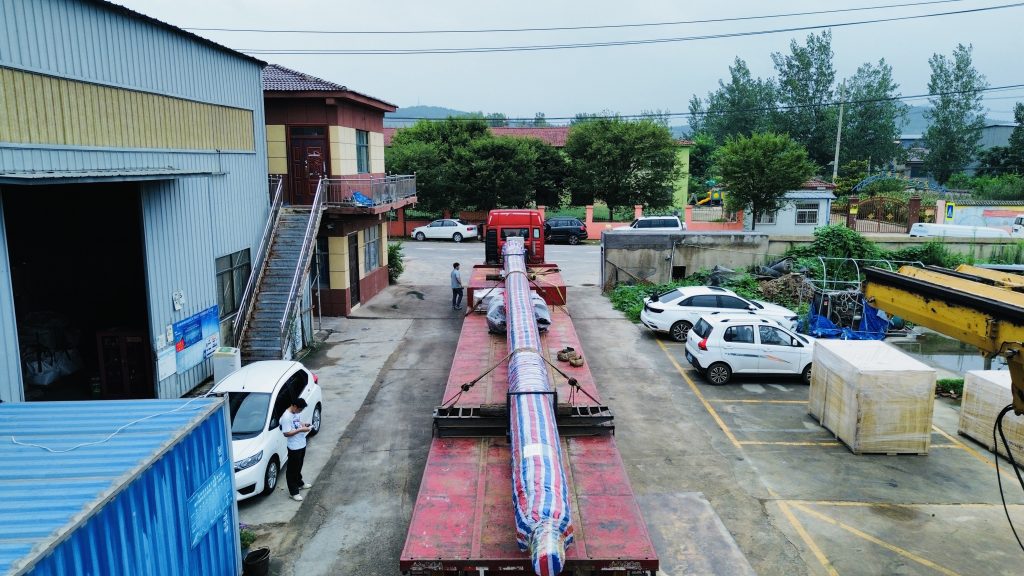
What actually leaves our factory
Every shipment is built around a bar type—interlocking for rock and large diameters, friction for medium soils—and the details that match the customer’s rig: stage count, lock geometry, drive adapter, and wear protection. Many orders include accessories: pressure plates, key strips, drive adapters, wear plates, retaining rings, sometimes slewing bearings and small parts kits. We also ship refurbished rotary drilling rigs and used rigs on separate logistics plans, but the bar is the hero of most containers. The goal is simple: protect the coating system, protect the contact faces, prevent movement, and keep water out.
The four-layer wrap: simple to describe, exacting to execute
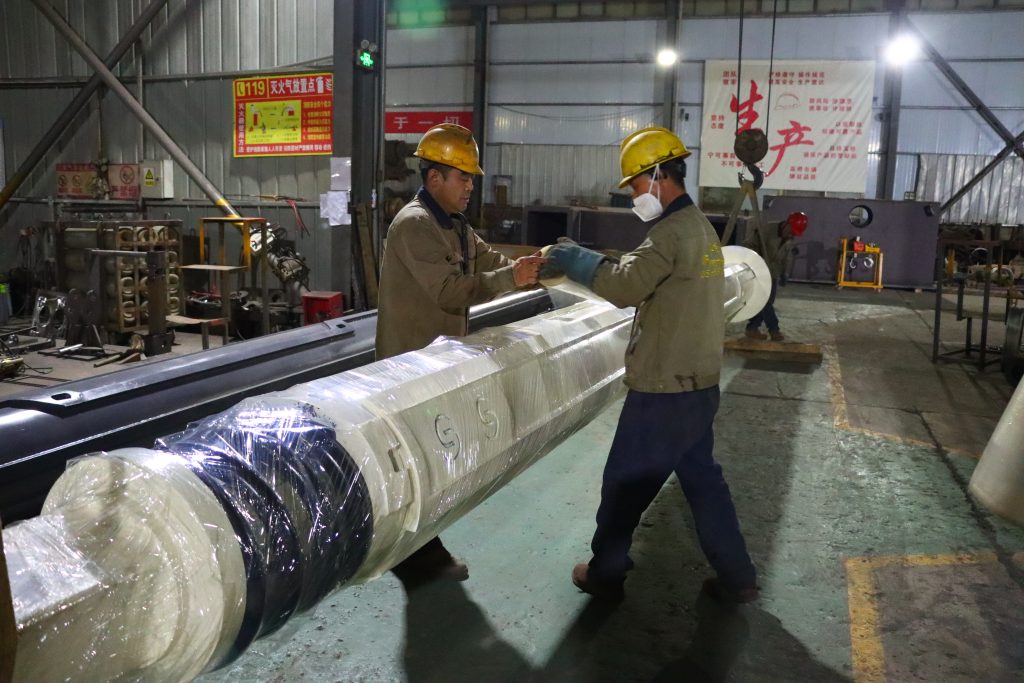
On paper our method is one sentence; on the floor it is a choreography. From the steel rack to the container, the bar never travels unprotected. The four layers are applied in order and tensioned so they behave as a single skin.
Layer 1 — Film for preserving the primer
The first contact is a clean film applied directly over the primered surface. It isn’t there to look shiny; it is there to isolate dust and moisture and to keep the base coat intact before the outer layers do their job. We run the film lengthwise, keep the seam away from key strips and lock faces, and close every transition with tidy overlaps. When the bar is unwrapped at the destination, the primer looks like it did in the assembly bay—no scuffs from early handling.
Layer 2 — Film that takes the scratches
The second film adds a sacrificial skin. This is the layer that may rub against slings, rollers, or the inside of the steel frame. It protects the first film and the primer beneath it. Where the bar geometry changes—around the drive adapter or retaining-ring shoulders—we reinforce the film with smooth wraps that avoid ridges. The purpose is not to make a mummy; it is to prepare a surface that slides without abrading.
Layer 3 — Bubble wrap for shock and vibration
Now we add bubble wrap as the energy absorber. It cushions against the small, repetitive knocks that happen in a truck yard or on a ship. The material is continuous, not strips, so there are no soft spots. It bridges around wear plates and lock housings without gaps. We use it to decouple the steel from the world: loading forks, tie-downs, braking events, and the rhythm of ocean swell.
Layer 4 — Tarpaulin against water and sun
The last coat is a water-resistant tarpaulin that also shields from sunlight. Its job is to shed rain and spray, keep dirt out of the bubble wrap, and give us a surface we can strap to without biting into the inner layers. Hems are folded and taped down; nothing flaps. When you see one of our bars arrive at a jobsite or a bonded warehouse, this is the blue/green outer skin with crisp edges and clear shipping marks.
Between each layer we spiral-wrap industrial tape to lock the material in place. It is not decoration; it keeps the package tight so there is no pump action that could wear through during transit. If you have ever unwrapped a bar that looked like it had been sanded by its own packaging, you already know why the tension and seam placement matter.
Fixation and lifting: the steel frames with rubber in the right places
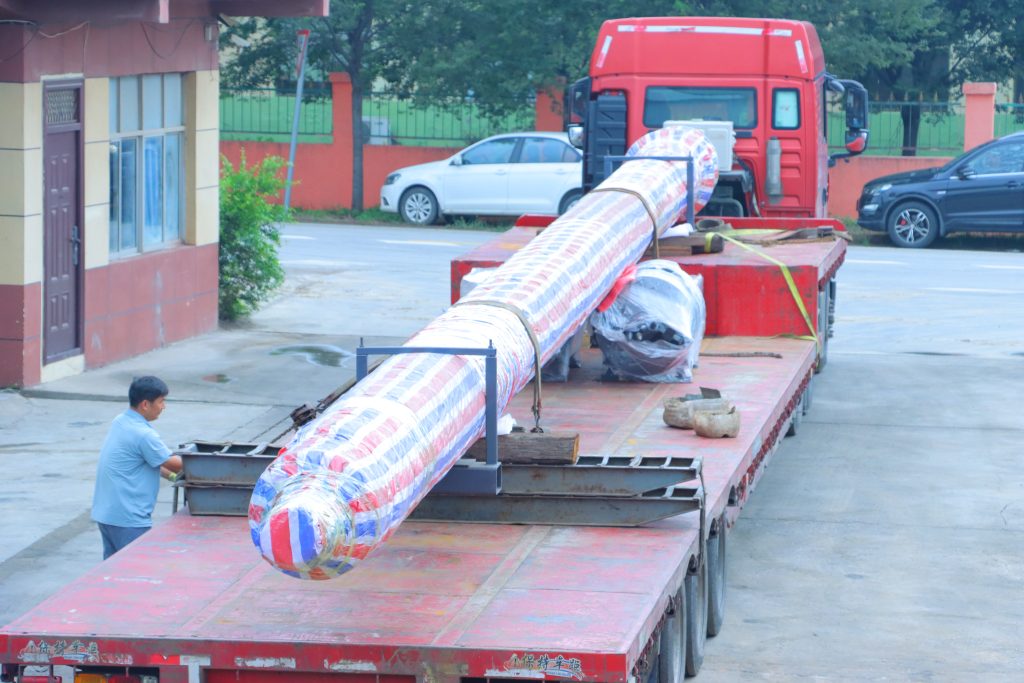
A wrapped bar is still a cylinder. It must be fixed and liftable without compromise. We mount steel frames on the front and rear of the bar. Each frame provides two functions: rigid fixation for transport and clear lifting points for cranes or forklifts at the destination. At every contact point, we insert rubber pads so the frame never bites into the steel; pads also remove micro-gaps that could let the bar work itself loose when the truck hits expansion joints.
The frames are tightened by bolts and banding. The bar does not creep forward under braking, and it will not pivot when a strap is tensioned. For long interlocking Kelly bars we check center of gravity and align the frames accordingly; for friction bars the approach is similar but the geometry around the outer tube is simpler. Either way, the frames make it safe for a yard crane to pick the bar straight from the truck bed.
Markings and traceability that help real people
Ports are busy places. A clear mark saves a phone call. We stencil model, stage count, length, order number, and gross/net weight where handlers can read them. We indicate front/rear and the preferred sling direction. Barcodes or QR codes (where requested) link to documents: packing list, drawings for the drive adapter, and the checklist signed by the team that wrapped the bar. None of this is paperwork theater; it simply shortens the time between container door opening and safe unloading on your side.
How the parts ship
A Kelly bar is the headline, but small parts keep the performance honest. Pressure plates, key strips, wear plates, retaining rings, drive adapters, and hardware ship in steel-edged crates or palletized boxes with foam and separators. Contact surfaces are oiled, sensitive faces are covered with non-woven wraps, and desiccant bags ride with the kit so the metal sees as little humidity as possible. Labels mirror the main bar’s marks, which means your warehouse can match kits to bars without opening every box.
If you work with rotary drilling rig refurbishment or used rotary drilling rigs in parallel, we coordinate the parts bill so you are not waiting on a pressure plate while the rig sits on stands. That is how schedules slip; our shipping team treats matched sets as single projects even if they travel in different containers.
Where it goes and how we decide the route
Most of our export traffic moves through Shanghai Port, Lianyungang, and Qingdao. Which one we use depends on three things you tell us: requested delivery date, payment date, and vessel schedule that fits your receiving plan. We work with forwarders who understand over-length steel and who don’t treat a Kelly bar like garden furniture. If your contract is FOB, we deliver to the port and hand over at the ship’s rail. If it’s CFR or CIF, we book the ocean leg and keep you updated through the sail. For EXW and FCA, we prepare the goods for your trucker with the same packaging and frames; quality doesn’t depend on Incoterms.
Documentation follows the job: commercial invoice, packing list, certificate of origin where required, and other certificates specified in your order. We share photos of the final package and container stuffing so your receiving team knows exactly what to expect.

Why this level of care matters to performance
It is easy to talk about torque and crowd force in a brochure. The less glamorous truth is this: the fastest way to ruin a good bar is to let transport vibration chew on lock faces, or let salt air and moisture start working on the coating during a long wait. Our four-layer method and frame design exist so that doesn’t happen. When your SANY SR-series, XCMG XR-series, ZOOMLION, or BAUER BG-series rig picks up the bar for the first time, the lock tooth looks like it did in our test bay, and the telescope feels the way the drawing intended. That is the difference between a clean first hole and a day lost to head-scratching.
A quick April vignette
One April shipment this year combined interlocking Kelly bars for large-diameter piles with spare kits for a customer that runs mixed fleets. The project required split arrivals to match cash flow and site readiness. We packed the bars with the standard four layers and frames, routed one lot through Qingdao for an earlier vessel and held the second lot for Shanghai to align with the client’s payment schedule. When the first container landed, the crew sent back a short note: “Unwrap, lift, bolt the drive adapter, go. No drama.” That sentence is the best review any manufacturer can hope for.