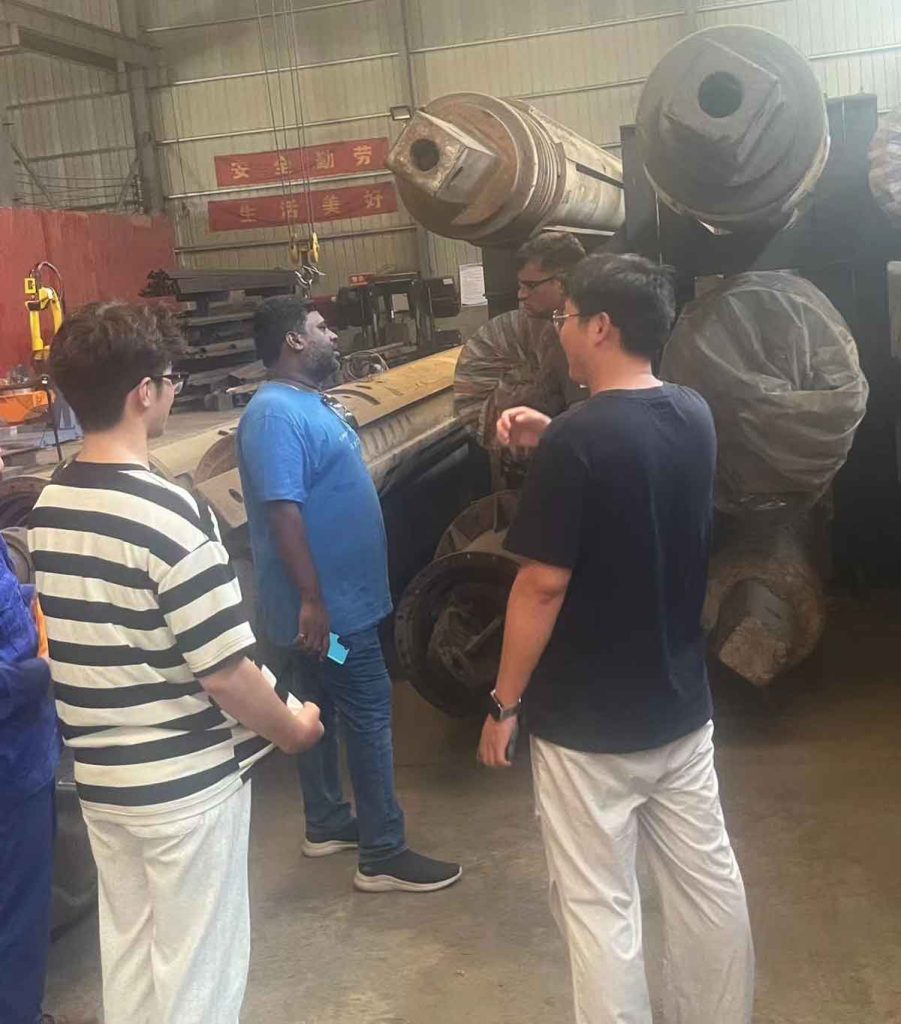
What JM chose to highlight at the exhibition
The easiest way to attract attention at an industrial event is to show the biggest machine available. We took a different approach. Our message was built around the part of the drilling system that often decides whether torque becomes productive drilling or wasted motion: the Kelly bar.
On our site and in our recent articles, we have consistently explained the difference between interlocking Kelly bars and friction Kelly bars, and why that choice matters depending on geology, pile depth, and rig class. Interlocking bars remain the preferred answer for mixed ground, dense sands, and rock-related applications because they transfer torque positively and give the operator a cleaner locking response. Friction bars remain valuable for longer piles and cleaner soils where lower weight and faster telescoping help cycle time. That is not just theory for marketing copy. It is the exact practical distinction that project teams ask about when they are selecting between cost, depth, speed, and durability.
At the exhibition, this gave us a natural way to present JM’s strengths.
First, we highlighted our JS-series interlocking Kelly bars, including the kinds of configurations already reflected on our product and blog pages, such as JS406, JS419, and related stage-length combinations. These models speak directly to customers searching terms like interlocking Kelly bar, customized Kelly bar, kelly bar sales, SANYSR Kelly bar, and XCMG Kelly bar. They also allow us to show that a Kelly bar is not a generic steel assembly. It is a working component defined by lock geometry, key-strip design, wear protection, straightness, adapter compatibility, and full-stroke behavior.
Second, we used the exhibition to reinforce our position in refurbished rotary drilling rigs and used drilling rig sales. That is a major practical topic in the market today. Many contractors are under pressure to control capital expenditure without sacrificing uptime. A well-inspected used rotary drilling rig paired with the correct bar and a realistic spare-parts plan can be a stronger business decision than chasing a new machine with a stretched budget. Our site already reflects that reality through product and blog content around XR280E, XR360E, XR400, and the pairing logic between rig torque windows and Kelly bar selection. The show gave us a chance to bring those ideas into face-to-face conversation.
Third, we emphasized that JM is not only selling bars or rigs as separate items. We are increasingly presenting ourselves as a supplier of a complete foundation machinery and piling machine solution: rotary drilling rig + Kelly bar + spare parts + packaging + commissioning logic. This matters because buyers rarely suffer from a lack of product brochures. They suffer from a lack of clear integration.
Why exhibitions still matter in a technical industry
A lot of industrial buying starts online now. Buyers search keywords like kelly bar, rotary drilling rig, drilling machine, foundation machine, used rotary drilling rig, second-hand rotary drilling rig, drilling tool, and piling machine long before they send an inquiry. That makes the independent website increasingly important, and it is one reason we continue building content on jmachglobal.com around technical topics, packaging, rig selection, used Kelly bars, and regional jobsite conditions.
But exhibitions still do something the website cannot fully replace. They compress judgment. In one short conversation, visitors can decide whether the company behind the products understands details such as lock engagement, pressure plates, key strips, drive adapters, and the difference between “good-looking steel” and “ready-to-drill steel.” They can see whether the people at the booth talk only about catalog numbers or whether they can connect pile diameter, depth, geology, rig model, and shipping route into one practical answer.
For JM, that is where the exhibition worked in our favor. Our recent blog content has already introduced ideas such as the Product Passport, four-layer export packaging, and the logic of pairing XR280E vs XR360E with different JS-series bars. At the exhibition, those concepts became easier for buyers to understand because they could discuss them directly with our team. A customer asking about Southeast Asia, for example, does not just need a price. He may also need to understand humidity, port storage, coating protection, and how our film + film + bubble wrap + tarpaulin + steel frame with rubber pads packaging protects a bar during export. A visitor asking about dense sand or weakly cemented layers does not only need a spec sheet. He needs to understand why interlocking Kelly bars may save him more time than a cheaper but mismatched alternative.
Trade fairs create exactly the kind of environment where that difference becomes visible.
The company message behind the booth
Every company can print a banner. The harder question is what message the banner should stand for.
For JM, the answer is becoming clearer with each year. We do not want to be remembered simply as another supplier of steel tubes or another name in used drilling rig sales. We want to be known for three things.
The first is product seriousness. Whether the customer is looking for a friction Kelly bar, an interlocking Kelly bar, a refurbished XCMG rotary drilling rig, or a spare-parts package, the expectation should be that the recommendation is tied to the actual job. That means understanding not only the machine, but also the pile, the ground, the shipping plan, and the start-up risk.
The second is delivery discipline. Our recent content around the new 2,000 m² expansion and the “from factory to first hole” concept reflects this clearly. We are trying to reduce uncertainty before the job even begins: better inspection logic, better documentation, and packaging that protects real working surfaces rather than just appearance. Buyers do not remember a supplier because the product looked clean at the factory. They remember a supplier because the bar arrived at the site, lifted safely, locked properly, and drilled on day one.
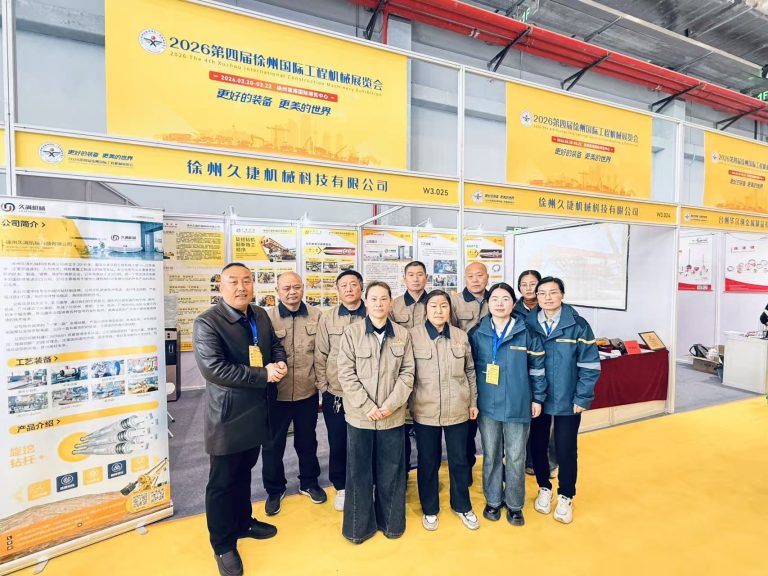
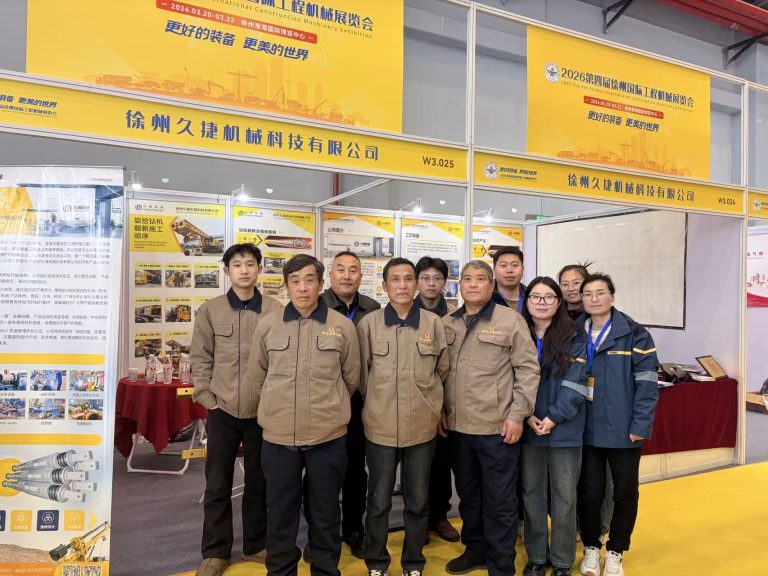
The third is human reliability. Exhibitions are still one of the best places to show that a company has a real team behind it. Booth conversations matter because industrial purchases are still trust-based. A contractor may start by asking about kelly bar sales, but what he is really judging is whether your team will still answer when he has a question two months later about pressure plates, adapter fit, or shipping timing.
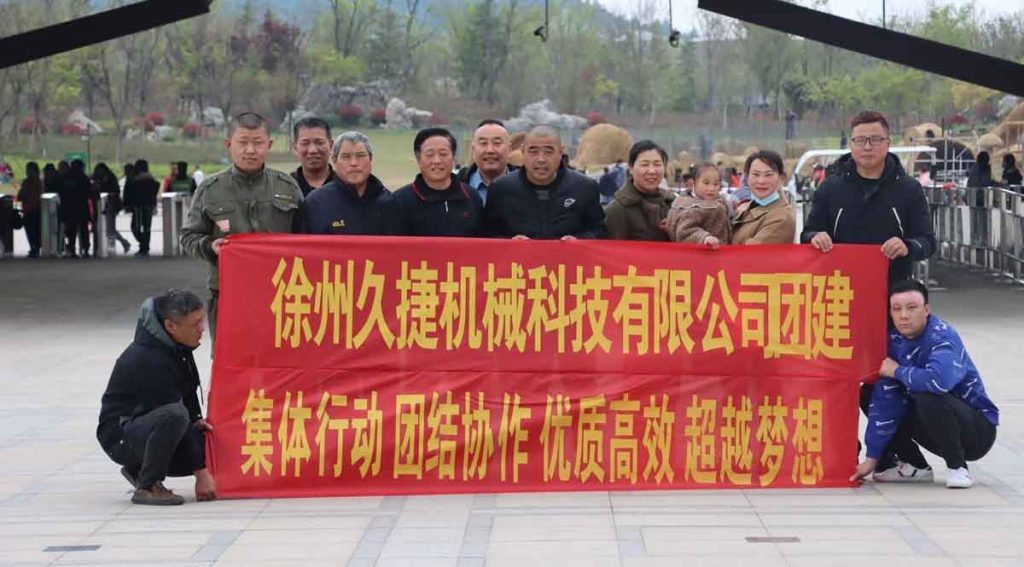
That is why photos of the team matter in this blog. They are not decoration. They show customers that the people behind the emails, quotations, and packing lists are real, present, and engaged.
Looking ahead: from exhibition traffic to long-term cooperation
A successful exhibition is not measured only by how many visitors pass the booth. It is measured by what happens afterward. Did the conversations lead to better-qualified inquiries? Did the people who stopped to ask about a used rotary drilling rig later ask for a matched interlocking Kelly bar and spare-parts kit? Did the visitors who came for a product brochure leave understanding JM as a company that can support actual production, not just shipment?
That is the direction we care about.
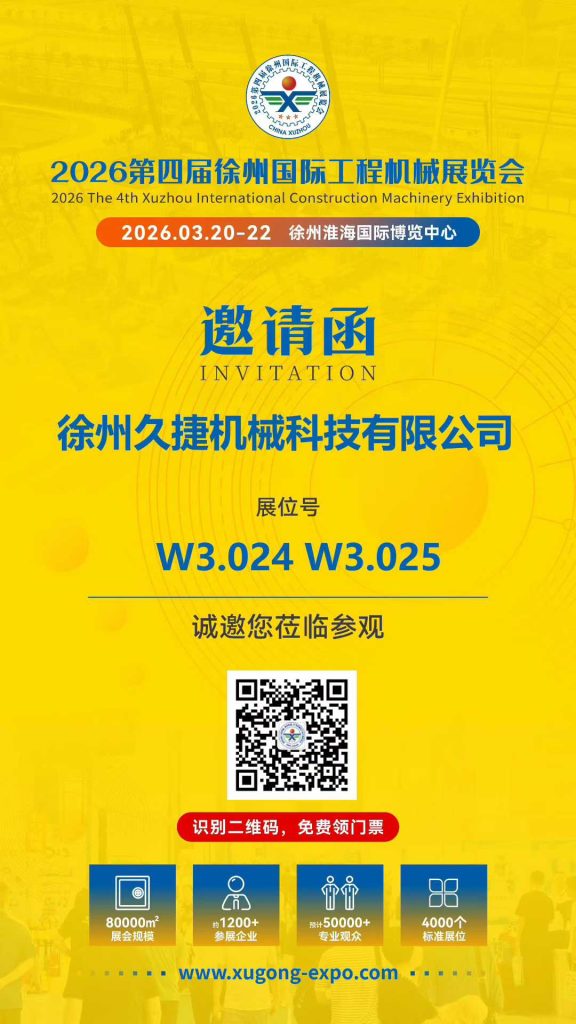
The 2026 Xuzhou International Construction Machinery Exhibition gave us another chance to present JM in that broader way: as a manufacturer rooted in foundation, piling, and drilling work; as a supplier of Kelly bars, rotary drilling rigs, used drilling rigs, and related drilling tools; and as a team that understands that in this industry, credibility is built through details.
If you met us at the exhibition, thank you for visiting. If you did not, the conversation is still open. Share your rig model, pile diameter and depth, ground profile, and delivery window, and we will reply with a focused recommendation—whether that means a customized Kelly bar, a refurbished rotary drilling rig, a spare-parts package, or a complete export-ready solution.