Why This Matters for Customers Looking for a More Complete Foundation Solution
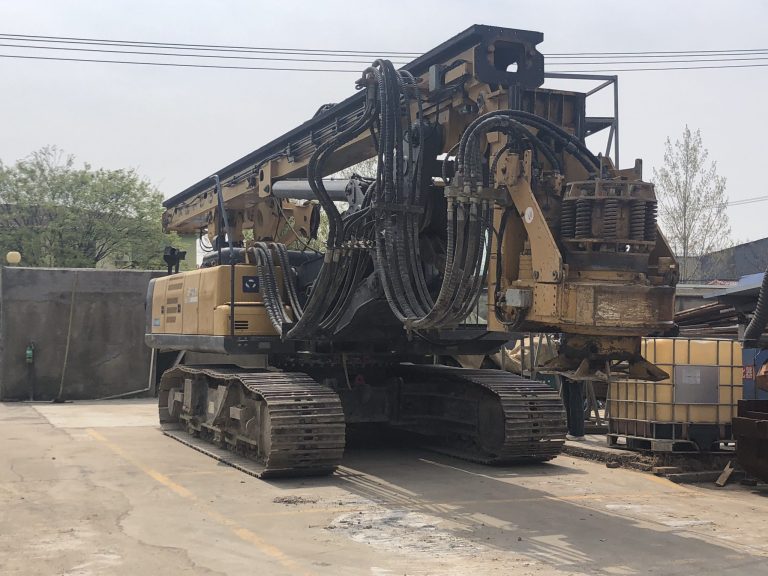
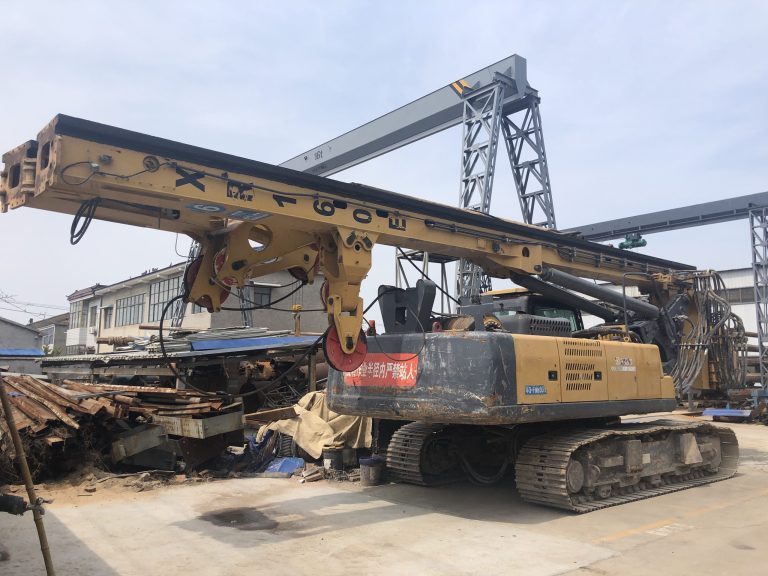
For many customers in foundation construction, the real challenge is not simply buying one machine or one component. The challenge is finding a supplier that can think in systems: rotary drilling rig + Kelly bar + drilling tool + spare parts + shipping + practical support. That is why the arrival of a premium used XCMG XR160E rotary drilling rig into JM’s inventory matters. This is not just another used machine added to a yard. It reflects a direction we have been building toward for some time—offering customers a more complete, more flexible, and more realistic path into foundation work, especially when project budgets, schedules, and geology do not allow one-size-fits-all decisions. JM’s own website positions the company not only as a precision-engineered Kelly bar manufacturer, but also as a supplier with an extensive inventory of fully inspected used excavators and rotary drilling rigs.
Not every project needs the biggest rig, but every project needs the right rig
In the heavy equipment world, it is easy to assume that larger always means better. In reality, foundation jobs are more selective than that. A contractor working on urban piles, medium-depth bored foundations, municipal support work, or tight-access projects may not need the torque class of an XR360E or XR400. What he needs is a rig that fits the actual pile design, site layout, mobilization limits, and budget. That is where a machine in the XR160E class becomes relevant. It sits in a segment that many contractors consider practical and versatile: large enough to handle serious rotary drilling work, but more manageable in transport, project cost, and daily operation than higher-torque classes. On JM’s site, the current rig discussion already emphasizes the importance of choosing machinery by torque window, pile geometry, and ground conditions, rather than by size alone.
For that reason, bringing in a premium used XR160E is not primarily about selling a machine. It is about strengthening a solution range. Some projects clearly require a higher class machine such as an XR280E or XR360E; others need a more balanced platform that can work efficiently with the correct interlocking Kelly bar or friction Kelly bar without overcommitting capital. JM has already built public content around this system logic—how rigs, bars, and geology must be matched together—so this XR160E becomes part of a broader offering, not a disconnected inventory item.
Why this expands JM’s value beyond what a single-product supplier can offer
There are many companies in the market that can supply Kelly bars. Some do that very well. But a customer often faces a bigger problem than simply sourcing a bar. He may need to answer all of the following at once: what rig class is suitable, what customized Kelly bar should be used, whether interlocking Kelly bar or friction Kelly bar is more appropriate, what spare parts should travel with the shipment, and whether a used rig can provide better financial efficiency than a new machine. A bar-only supplier cannot solve that entire chain.
That is where JM’s model becomes more attractive. The company’s website makes clear that JM is already active across Kelly bars, used rotary drilling rigs, used excavators, and related support areas, rather than being limited to a single category. The product pages and blog content also show that JM has been deliberately building a system-based story: XR280E vs XR360E, tropical jobsite rig-and-bar matching, used Kelly bar value, packaging, and the “from factory to first hole” approach. Adding a premium used XR160E strengthens that same logic at a lower rig class, making the offering more complete for customers whose work does not justify a heavier machine.
In simple terms, a manufacturer that only sells drill rods may be able to provide a component. JM is trying to provide a decision path. That is a major difference, and in today’s market it matters more than ever.
The real customer question: how do I balance cost, capability, and risk?
This is where a premium used XR160E becomes interesting from a solutions perspective. Many contractors today are caught between three competing pressures.
The first is capital discipline. A new machine may not always make sense if the project mix is uncertain, cash flow is tight, or the customer wants to deploy funds into more than one part of the operation. The second is capability. The machine still has to be strong enough, stable enough, and compatible enough with the Kelly bar, drilling tool, and pile demand. The third is risk. A cheaper machine is not cheaper if it arrives with unclear condition, mismatched accessories, or poor spare-parts planning.
The value of a premium used rig lies in how these three pressures can be balanced. JM’s position in the market already reflects this through its emphasis on fully inspected used equipment, cost-efficient rotary drilling rigs, and practical pairing with JS-series bars and spare-parts kits. The same principle applies to an XR160E: the point is not simply that it is “used,” but that it can sit in a workable middle ground between cost and readiness when backed by the right inspection, the right matching work, and the right export preparation.
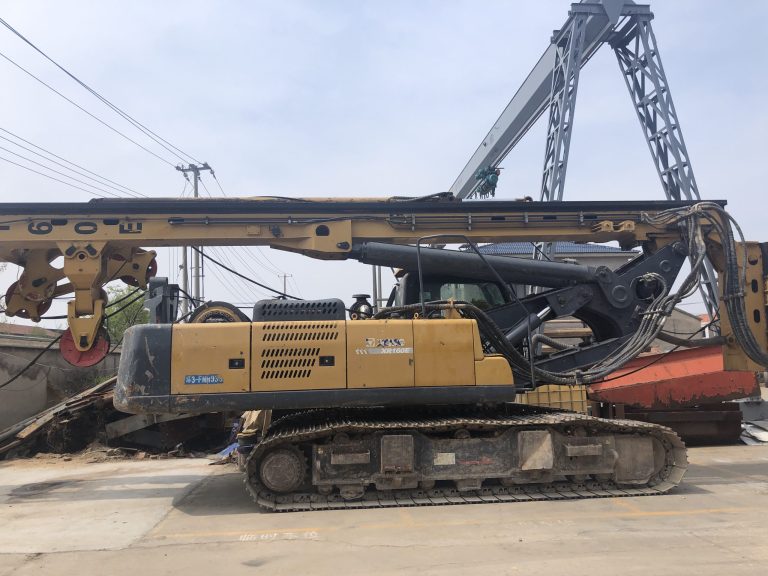
A rig is only part of the answer; matching is where the solution begins
One of the recurring messages across JM’s independent-site content is that a rotary drilling rig should not be treated as an isolated purchase. A rig becomes productive only when it is paired properly with a Kelly bar, the correct drive adapter, the right pressure plates and key strips, and a realistic spare-parts and shipping plan. The blog on rig selection and productivity made this point directly: the right decision begins with the ground and pile, then moves to the torque window, then to the correct bar type and staging.
That same logic is useful for understanding the XR160E. A customer who is searching terms like rotary drilling rig, drilling rig, piling machine, foundation machine, drilling machine, or used rotary drilling rig is usually not searching in abstraction. He is trying to answer a real project question. Can this machine support my pile diameter? Can it work efficiently in my typical ground? Will it match the interlocking Kelly bar I need? Can I source drilling tools and spare parts from the same supplier? What happens after arrival at port?
These are exactly the types of questions JM is better positioned to answer because of its mixed profile as both a Kelly bar manufacturer and a used machine supplier. It means the conversation can move from a generic machine listing into a specific combination: for example, a used XR160E paired with a suitable customized Kelly bar, selected by job depth and ground profile, then shipped with a parts package and documented export preparation. That is a more useful story than simply saying, “we also sell used rigs.”
Why one-stop support matters more in a slow market
When the market is hot, buyers sometimes tolerate fragmented procurement. They buy the rig from one place, the bar from another, the spare parts from a third, and solve the rest later. When the market slows, that model becomes expensive. Every mismatch costs time. Every delay stretches cash flow. Every missing part becomes more painful. This is exactly why a diversified but related service model becomes an advantage.
JM’s business profile already points in that direction. The company combines kelly bar sales, used drilling rig sales, and broader support under one identity. The site’s Cases section also shows that its products are already working internationally in places such as Indonesia, Vietnam, Mexico, and Malaysia, with internal-locking Kelly bars like JS377-4×6, JS377-4×8, JS406-4×10, and JS406-4×15 used on real projects. Public blog content also notes that JM’s Kelly bars and refurbished XCMG rigs have already been used in Southeast Asian markets, which helps show that the company is not trying to invent a solution narrative from nothing.
So when JM brings a premium used XR160E into inventory, the significance is broader than “we added another machine.” It signals that the company is continuing to deepen its one-stop foundation offering. For some customers, that may mean buying a used rotary drilling rig and a matching interlocking Kelly bar together. For others, it may mean using JM first as a consulting source to compare an XR160E-class machine with a heavier alternative. For still others, it may simply mean that when they search keywords such as used drilling rig, second-hand rotary drilling rig, XCMG rotary drilling rig, drilling tool, customized Kelly bar, or foundation machine, they find a company that can speak across the full chain instead of only one product line.
More than inventory: a direction for JM’s future
This XR160E also reflects a broader direction that matters strategically. JM has already communicated through its website and blog that it operates from a modern manufacturing base, including a 10,000 m² foundation and a later 2,000 m² expansion focused on Kelly bar production and refurbishment throughput. That expansion story was not only about adding floor space. It was about making the company more capable of serving customers across production, reconditioning, packing, and export timing. Bringing in a premium used XR160E fits naturally into that same direction. It expands the company’s usable solution range without pulling it away from its core.
That distinction is important. A lot of companies diversify by moving too far from what they understand. JM’s strength is clearly tied to the world of foundation machinery, piling, drilling, and the mechanical systems surrounding Kelly bars and rotary drilling rigs. Expanding from bars into better-structured used-machine support is not random diversification. It is a practical move along the same value chain. For customers, that creates more confidence. For the company, it creates a stronger identity than being known only as a component maker.
Looking ahead: from machine listing to project-oriented conversation
If a customer finds this article through search, the goal is not just for him to know that JM now has a premium used XR160E. The more important takeaway is this: JM is building toward a model where customers can solve more of their project questions in one place.
If you are evaluating a project right now and trying to decide whether you need a heavier rig or a more balanced machine, whether to pair it with an interlocking Kelly bar or friction Kelly bar, whether a used rotary drilling rig makes better financial sense, or how to ship equipment and spare parts safely to your destination port, we welcome that conversation.
Because in the end, most customers are not looking for a catalog. They are looking for fewer wrong turns.