In many projects, a Kelly bar is treated as a simple purchase.
A steel component. A telescopic structure. Something to replace when worn.
But after years working with contractors across Southeast Asia, the Middle East, and Latin America, we have seen a consistent pattern:
most drilling problems do not start underground—they start at the moment of equipment selection.
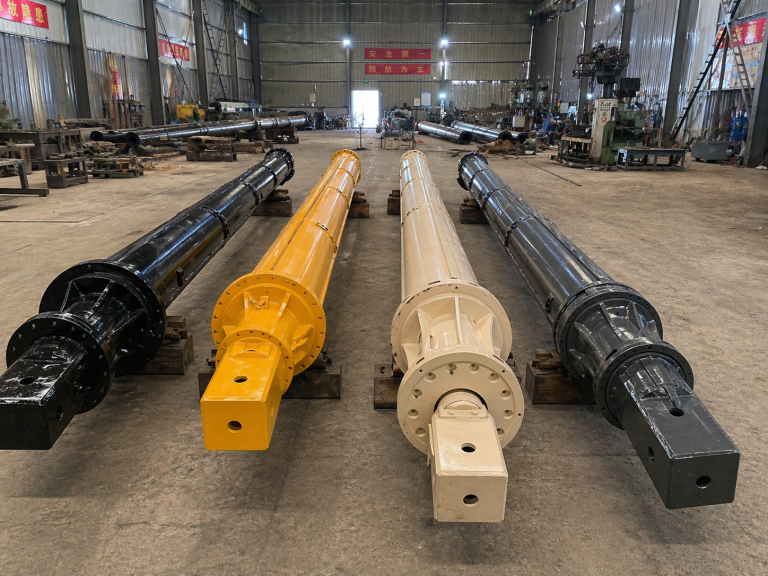
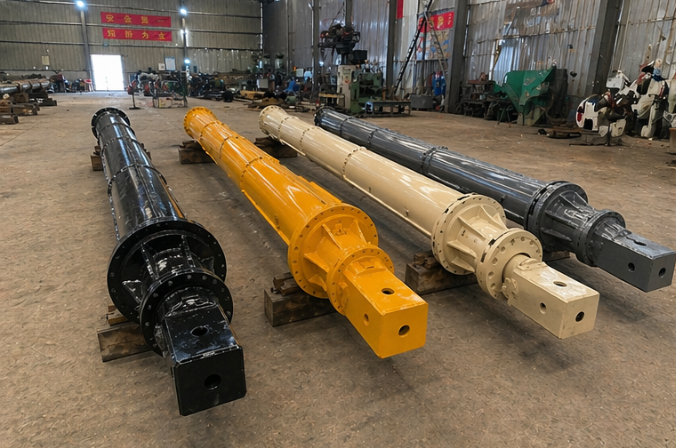
This week at JM, four customized kelly bars were completed for a piling contractor in Indonesia. At first glance, the project looks ordinary. Four units, standard production, standard delivery.
But behind this batch, there is a more important story—one that reflects how foundation equipment should actually be understood.
The Request Was Simple. The Problem Was Not.
The client operates several rotary drilling rigs, mainly in the mid-range category, comparable to a 60p piling rig class. Their projects involve urban piling, mixed soil layers, and intermittent dense strata.
Their initial request was straightforward:
“Need kelly bars for current rigs.”
But once we started reviewing their usage conditions, a different picture emerged.
Their existing bars were showing:
- uneven wear across outer sections
- unstable locking performance under load
- increased vibration during drilling cycles
- gradual loss of efficiency over time
None of these are unusual. In fact, they are among the most common issues faced by contractors using used rotary drilling rigs or even relatively new machines.
The key point is this:
these are not manufacturing defects. They are system mismatch symptoms.
A Kelly Bar Does Not Work Alone
In real drilling operations, a Kelly bar is only one part of a chain.
It sits between the drilling rig, the drilling tool, and the ground itself.
Torque transmission, telescopic stability, locking precision—everything depends on how these elements interact.
If the bar is slightly over-designed for the rig, efficiency drops.
If it is under-matched, wear accelerates.
If the locking system tolerance is off, vibration increases.
This is why two contractors using the same rotary drilling rig model can experience completely different performance.
And this is also why simply buying a “standard kelly bar” rarely solves the real problem.
What We Actually Changed
For this Indonesia project, we did not start from production.
We started from re-matching.
The existing setup was analyzed as a system: rig torque output, working depth range, soil resistance, and previous wear patterns.
From there, the new bars were adjusted—not dramatically, but precisely.
The wall thickness distribution was refined to reduce stress concentration during extension.
The locking system tolerance was tuned to ensure smoother engagement under real load conditions, especially important for full locking kelly bar configurations.
Wear-prone areas such as pressure plates and guide strips were reinforced.
And most importantly, the entire design was aligned with the client’s actual rigs and drilling tools, not just theoretical specifications.
Nothing in this process looks revolutionary.
But in drilling, performance is rarely decided by big changes.
It is decided by whether small details are right.
Why Kelly Bar Layout Still Gets Overlooked
One detail that often goes unnoticed is kelly bar layout.
Length, number of sections, and telescoping ratio directly influence how torque is transferred and how stable the system remains during drilling.
In this case, optimizing the layout reduced unnecessary stress during extension and improved overall drilling rhythm.
The result is not something you immediately see in a photo.
It is something you see in fewer stops, smoother operation, and more meters drilled per day.
Cost Is Not What Most People Think
In foundation construction, equipment cost is visible.
Operational cost is not.
A contractor rarely loses money because of the purchase price of a Kelly bar.
He loses money through inefficiency:
- slower drilling cycles
- higher fuel consumption
- frequent maintenance interruptions
- premature component replacement
This is why experienced contractors increasingly focus on cost per meter drilled, rather than initial price.
A properly matched customized kelly bar—whether used on a new rig or a second hand rotary drilling rig—can shift that balance significantly.
Where JM Stands in This Process
Many manufacturers can produce Kelly bars.
Fewer understand how those bars behave on real jobsites.
JM operates across both sides of that line.
As a kelly bar manufacturer, we control production quality.
As a supplier working with used drilling rigs, including XCMG and SANY platforms, we understand how equipment actually performs after leaving the factory.
That combination allows us to approach each project differently.
Not as a product order, but as part of a working system.
Built for Conditions Like Indonesia
Projects in Indonesia and across Southeast Asia bring their own challenges:
humidity, mixed ground conditions, demanding schedules, and high equipment utilization.
In such environments, durability alone is not enough.
Adaptability becomes equally important.
Each customized kelly bar in this batch was built with that in mind—designed not just to last, but to operate consistently under variable conditions.
A Different Way to Look at a Standard Product
A Kelly bar will always look like a standard product.
Steel sections. Telescopic structure. Mechanical connection.
But in practice, it defines how efficiently a drilling rig, a piling machine, or an entire foundation project performs.
At JM, we focus on one simple principle:
Make the system work better, not just the component.
If you are working with:
- rotary drilling rig
- drilling rig
- used rotary drilling rig
- piling equipment
- or looking for a more reliable kelly bar solution
it may be worth discussing the system before placing the order.
Because in drilling, the difference between average and efficient is rarely visible.
But it is always measurable.
Contact JM
WhatsApp: +86 188-5216-7087
Email: zhenghan.zhang@jmachglobal.com
CC: beverly.liu@jmachglobal.com | wayne.wang@jmachglobal.com | gloria.chong@jmachglobal.com