In foundation construction, the difference between a smooth project and a difficult one is often not decided by one large machine alone. It is decided by how well the entire drilling system works together: the rotary drilling rig, the Kelly bar, the drilling tool, the operator, the soil condition, and the support behind the equipment.
At JM, we do not see a Kelly bar as a simple steel component. We see it as the working link between the rig and the ground. If that link is designed correctly, the rig transfers torque efficiently, the drilling tool cuts more steadily, and the contractor gains more predictable production. If it is poorly matched, the result is easy to recognize: unstable locking, excessive wear, vibration, slower drilling cycles, and unnecessary downtime.
This is why JM focuses not only on manufacturing Kelly bars, but also on helping customers choose the right interlocking Kelly bar, friction Kelly bar, full locking Kelly bar, or customized Kelly bar for their actual working conditions.
A Kelly Bar Manufacturer That Starts from the Jobsite
Many customers first contact us with a simple request: “We need a Kelly bar for our rotary drilling rig.” But a good recommendation cannot start from the product name alone. It must start from the project.
What rig are you using? Is it an XCMG, SANY, ZOOMLION, BAUER, or another brand? What is the drilling depth? What is the pile diameter? Are you working in soft clay, sand, mixed ground, gravel, dense layers, or weathered rock? Is the rig a new machine, a used rotary drilling rig, or a second-hand rotary drilling rig that needs better matching?
These details matter because a Kelly bar does not work independently. It works inside a complete drilling system. The same bar may perform very differently on different machines or in different ground conditions. For example, a contractor working with a mid-size rig similar to a 60p piling rig may not need the same Kelly bar structure as a contractor working with a high-torque machine for deep foundation piles. The right Kelly bar layout—including section number, length, locking structure, wall thickness, drive adapter, and wear protection—has a direct effect on drilling stability and long-term cost.
This is where JM’s approach becomes different. We do not only ask what product the customer wants. We ask what problem the customer needs to solve.
Interlocking, Friction, and Customized Kelly Bars: Choosing the Right Structure
For most foundation contractors, the key choice is between an interlocking Kelly bar and a friction Kelly bar.
A friction Kelly bar is often suitable for softer or cleaner soil conditions where drilling resistance is moderate and fast telescoping is important. It can be an efficient and cost-effective choice when the project does not require strong mechanical locking at every section.
An interlocking Kelly bar, sometimes searched by customers as a full locking Kelly bar, is designed for more demanding ground conditions. When the rig must transfer higher torque through multiple telescopic sections, the locking system becomes essential. In mixed soil, dense sand, gravel layers, or harder ground, the interlocking structure gives the operator a more secure torque transfer and a more reliable drilling feel.
A customized Kelly bar goes one step further. It is not just a standard bar with a different length. It is adjusted according to the rig model, Kelly box size, drilling depth, pile diameter, torque requirements, and expected soil resistance. For international customers, especially contractors working in Southeast Asia, the Middle East, South America, and other complex markets, this level of customization can make a clear difference in productivity.
JM manufactures Kelly bars with attention to practical working details: locking precision, section straightness, telescoping smoothness, pressure plate contact, key strip durability, adapter fit, and transport protection. These are not decorative features. They are the details that decide whether a bar performs consistently after weeks or months of jobsite use.
From Factory Production to System Matching
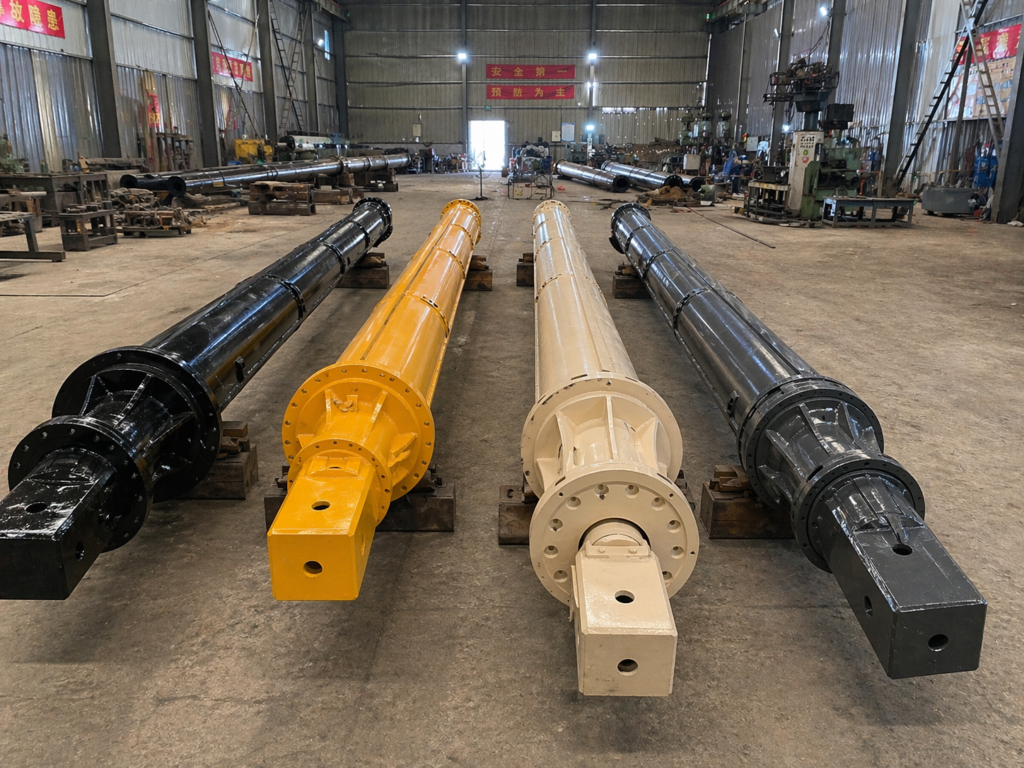
A recent batch of four Kelly bars produced in our factory shows how we think about manufacturing. These bars were prepared for an Indonesian piling contractor operating rotary drilling rigs in mixed ground conditions. The customer did not simply need four pieces of steel. They needed a reliable solution for daily drilling work.
Before production, our team reviewed the customer’s machine requirements, expected working depth, ground conditions, and previous usage feedback. From there, we adjusted the structure and layout of the bars to better match the customer’s rigs and drilling tools.
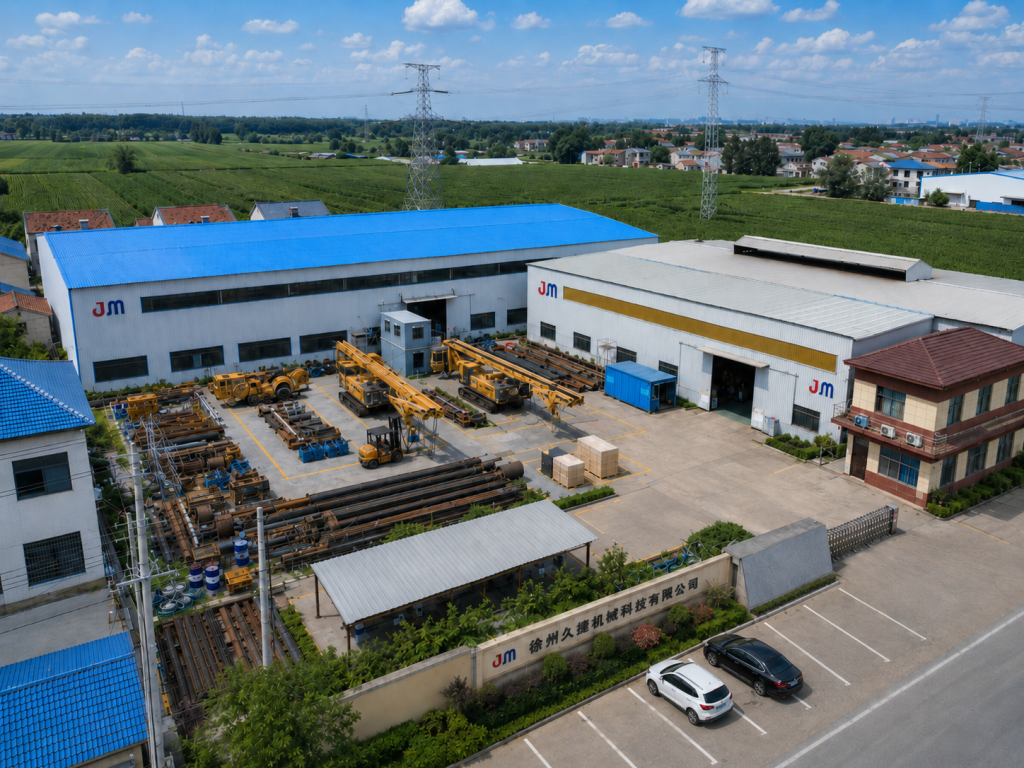
In actual production, the visible work includes cutting, welding, machining, assembly, painting, and packaging. But the deeper value lies in the decisions made before and during these steps. The wall thickness distribution must be reasonable. The locking area must be accurate. The front head and drive connection must fit the rig properly. The pressure plates and guide areas must be able to withstand repeated load cycles. The coating must protect the product during storage and shipment. The packaging must allow safe lifting and reduce damage during transport.
This is why JM treats Kelly bar production as engineering work rather than simple fabrication.
Supporting Rotary Drilling Rigs, Used Rigs, and Complete Foundation Equipment
Another important difference is that JM is not limited to Kelly bar production alone. We also work with rotary drilling rigs, used drilling rigs, used rotary drilling rigs, and related foundation equipment. This gives us a wider understanding of how the whole system behaves on site.
Some manufacturers only supply drill rods. That can be enough for customers who already know exactly what they need. But many contractors need more than a rod. They need help matching the rig, bar, drilling tool, spare parts, and shipping schedule.
For example, a customer using a used rotary drilling rig may face different issues from a customer using a new machine. A second-hand rig may have wear in the drive system, different operating behavior, or a modified Kelly box. If the Kelly bar is ordered only according to a rough model name, compatibility problems may appear later. JM’s experience with both Kelly bars and used drilling rig support helps reduce this risk.
This one-stop capability is becoming more important in today’s market. Contractors are under pressure to control cost, reduce downtime, and make every machine work harder. A supplier who understands only one component may not see the full picture. JM’s advantage is that we can discuss Kelly bar sales, used drilling rig sales, drilling tools, spare parts, packaging, and export delivery as part of one practical solution.
Why Better Matching Reduces the Real Cost of Drilling
In foundation work, the lowest purchase price is not always the lowest cost.
The real cost is hidden in drilling efficiency, fuel consumption, wear rate, spare parts, downtime, and project delay. A poorly matched Kelly bar may still look acceptable when it arrives, but the problem will appear during operation. The rig may vibrate more. The locking system may feel unstable. The outer sections may wear unevenly. The operator may need to slow down to avoid damage. The project may lose time without any obvious single failure.
A well-matched customized Kelly bar helps reduce these invisible losses. It allows the drilling rig and drilling tool to work more naturally together. The operator feels more stable torque transfer. The telescopic movement becomes more predictable. Wear becomes easier to manage. Maintenance becomes more planned instead of reactive.
For contractors, this means a better cost per meter drilled. That is the number that matters most in real projects.
JM’s goal is not only to deliver a product. Our goal is to help customers drill more efficiently, reduce avoidable downtime, and protect their investment in machines and tools.
Built for Global Customers and Real Working Conditions
JM serves customers in different markets, including Asia, the Middle East, South America, and other regions where foundation construction conditions vary widely. In markets such as Indonesia and Southeast Asia, contractors often face high humidity, mixed soil, tight project schedules, and heavy equipment utilization. In South America, customers may care more about shipping planning, cost control, and reliable communication before placing an order.
Different markets require different support, but the core principle is the same: the equipment must match the job.
For export orders, JM also pays close attention to packaging and delivery. A Kelly bar is large, heavy, and easy to damage if it is not fixed and protected correctly. Our export packaging normally considers surface protection, cushioning, waterproofing, lifting support, and safe transportation. For long-distance shipment, especially by sea, proper packaging is not optional. It is part of product quality.
This is especially important when customers order multiple bars, drilling tools, or spare parts together. A complete shipment should arrive in usable condition, with clear identification, proper fixing, and practical handling support.
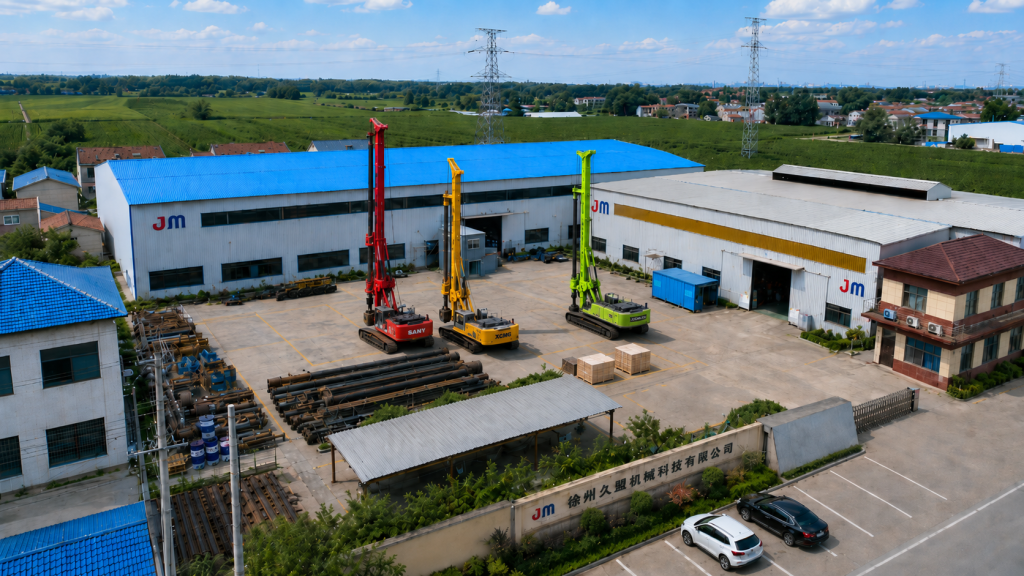
JM’s Advantage: Manufacturing + Matching + Service Thinking
The JM advantage comes from combining several roles into one supplier.
We are a Kelly bar manufacturer, but we also think like a solution partner. We understand interlocking Kelly bars, friction Kelly bars, full locking Kelly bars, customized Kelly bars, and how they match different rotary drilling rigs. We also understand the practical needs of customers who operate used drilling rigs, second-hand rotary drilling rigs, and mixed fleets from brands such as XCMG and SANY.
This allows us to help customers before, during, and after production.
Before production, we help confirm the rig model, drive size, depth requirement, and working condition. During production, we focus on structural accuracy, welding quality, machining precision, painting, and assembly. Before shipment, we check packaging, fixing, and documentation. After delivery, we remain available for technical communication, spare parts discussion, and future matching needs.
This is what we mean by a one-stop service. It does not mean doing everything loosely. It means connecting related parts of the same foundation equipment chain in a more practical way.
A Better Kelly Bar Starts with a Better Conversation
For contractors searching for kelly bar, full locking kelly bar, interlocking kelly bar, friction kelly bar, customized kelly bar, kelly bar layout, rotary drilling rig, used drilling rig, second-hand rotary drilling rig, drilling tool, piling machine, or foundation machine, the best first step is not always asking for a price.
The best first step is explaining the project.
Tell us the rig model. Tell us the drilling depth. Tell us the pile diameter. Tell us the soil condition. Tell us whether the machine is new or used. Tell us what problem you are facing now: slow drilling, vibration, wear, unstable locking, or poor compatibility.
With that information, JM can provide a more useful recommendation—not just a quotation.
Because a good Kelly bar is not selected from a catalogue alone. It is built from understanding the machine, the ground, and the customer’s real working conditions.
At JM, we manufacture Kelly bars. But more importantly, we help customers build better drilling systems.