For international foundation contractors, buying a Kelly bar is rarely just a purchasing decision. It is a technical decision, a cost-control decision, and often a project-risk decision. A Kelly bar must match the rotary drilling rig, the required pile depth, the ground condition, the drive head, the operator’s working habits, and the customer’s delivery schedule. When any of these details are ignored, the result is usually not visible on the quotation sheet—but it becomes obvious on site: unstable locking, slow drilling, excessive vibration, premature wear, and unnecessary downtime.
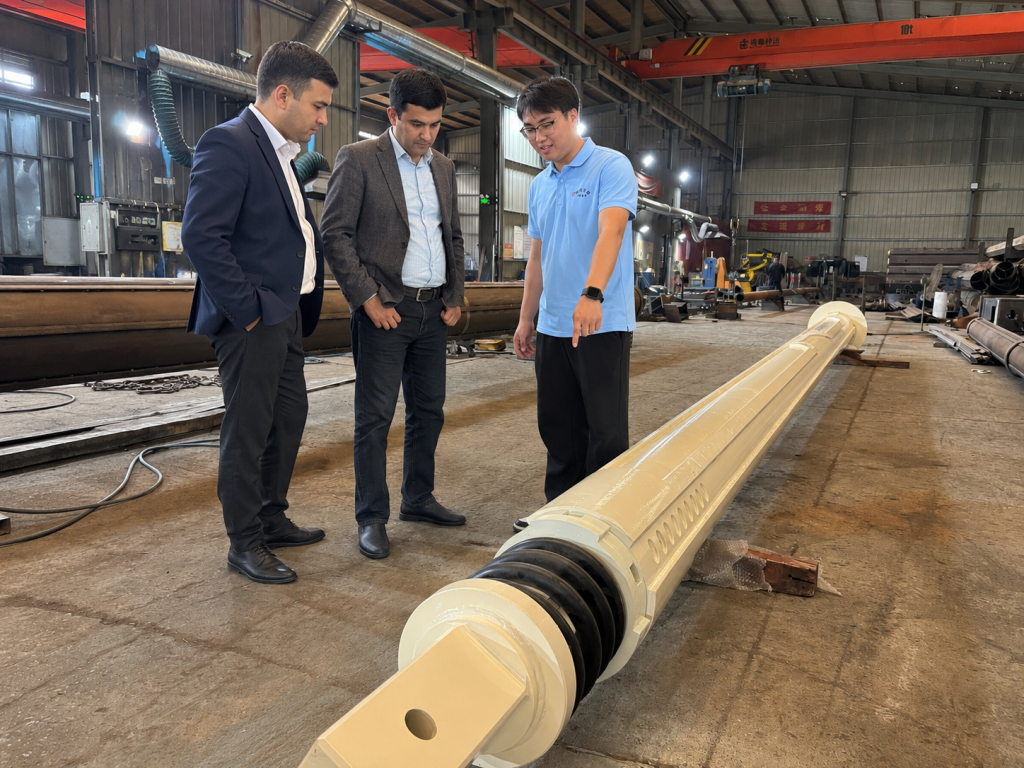
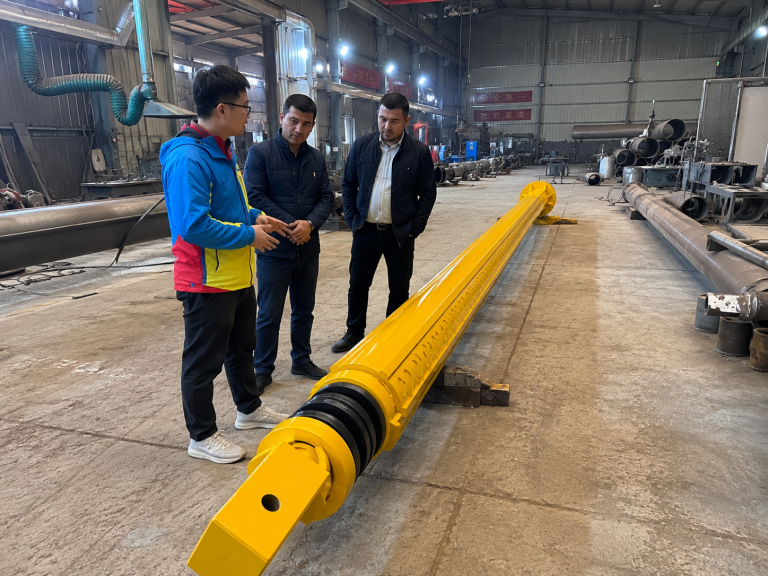
Recently, two customers from Turkmenistan visited the JM factory to discuss a customized Kelly bar project. During the visit, our team walked them through the production area, inspected the Kelly bar structure together, and discussed how the bar should be designed to match their actual drilling conditions. This visit was not a simple factory tour. It was a technical conversation around one practical goal: helping the customer receive a Kelly bar that can work reliably with their existing drilling equipment and reduce avoidable project risk.
Why a factory visit matters before ordering a customized Kelly bar
Many overseas customers first search for terms such as kelly bar, interlocking kelly bar, full locking kelly bar, friction kelly bar, customized kelly bar, kelly bar layout, rotary drilling rig, drilling rig, piling machine, or foundation machine. These searches usually begin with product interest, but the real question behind them is more specific: Will this bar fit my rig and my jobsite?
That is why JM encourages technical communication before final production. A Kelly bar is not a standard commodity in the same way as a small spare part. The diameter, wall thickness, section number, length, locking system, Kelly box, guide strips, pressure plates, and front-end structure all influence its performance. The same interlocking Kelly bar may behave differently on an XCMG rotary drilling rig, SANY rotary drilling rig, ZOOMLION drilling rig, or another brand if the drive adapter and torque conditions are not properly matched.
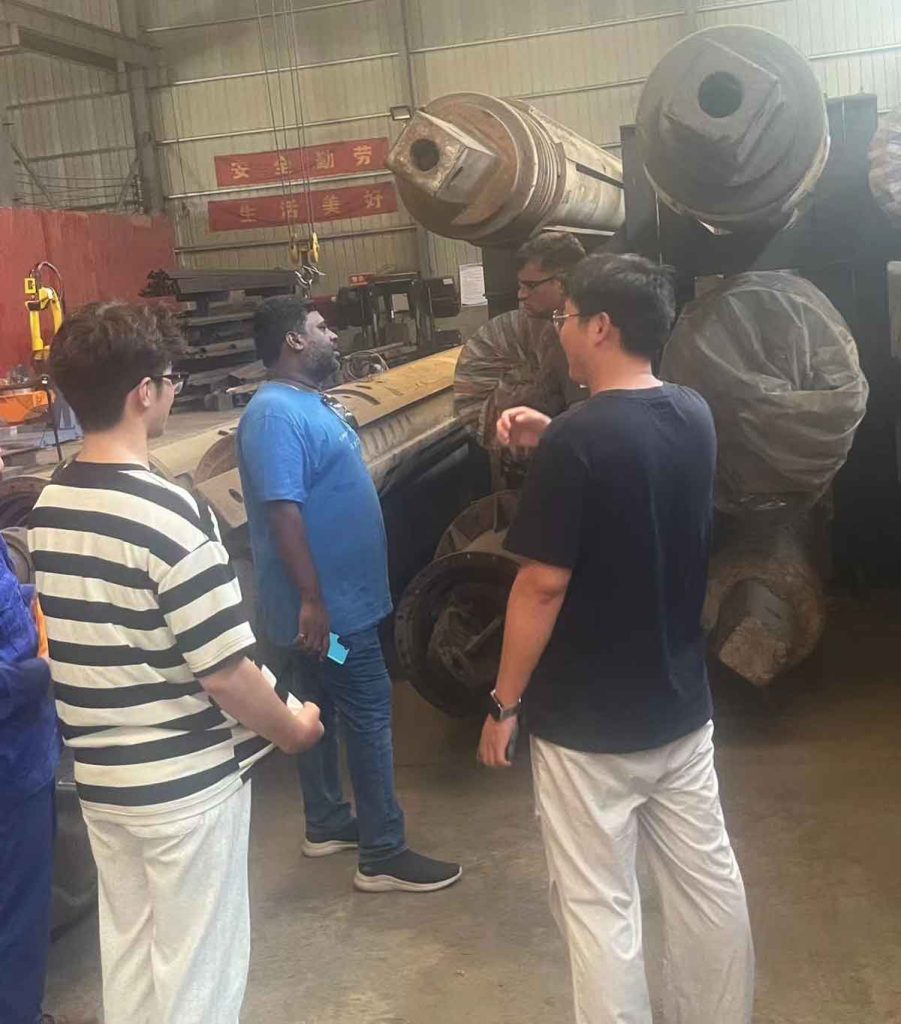
During the visit, the Turkmenistan customers were able to see real Kelly bar production instead of relying only on photos or catalog drawings. They inspected the surface, the locking structure, the welding areas, and the telescopic section design. More importantly, they could discuss their own project conditions face to face: rig model, drilling depth, pile diameter, soil resistance, required torque transfer, and spare-parts preparation.
For JM, this is where a better solution begins. We do not treat the order as “one Kelly bar of a certain length.” We treat it as a complete matching task between drilling rig, drilling tool, Kelly bar, and ground condition.
The customer’s key concern: reliability under real drilling conditions
Customers from Central Asia, including Turkmenistan, often work in conditions where equipment reliability is critical. Project sites may be far from the supplier, transport cycles are long, and downtime can quickly become expensive. Once a Kelly bar arrives on site, the customer expects it to work, not to become another problem that requires repeated adjustment.
The Turkmenistan customers were mainly concerned with three practical issues.
First, the Kelly bar must provide stable torque transfer. In foundation drilling, torque is not valuable unless it can be transmitted effectively from the rotary drilling rig to the drilling tool. If the locking system is not accurate enough, the operator may feel delayed engagement, vibration, or impact during drilling. That is why JM pays close attention to the precision of the locking structure in full locking Kelly bar and interlocking Kelly bar production.
Second, the bar must telescope smoothly. A Kelly bar works through repeated extension and retraction. If the section clearance is unsuitable or the guide area is poorly controlled, the bar may become difficult to operate after a period of work. For contractors, this means slower drilling cycles and higher maintenance pressure. JM evaluates the kelly bar layout from the start, including section number, tube straightness, guide strip position, and telescopic ratio.
Third, the bar must be suitable for long-term use, not just initial installation. Wear-prone areas such as pressure plates, locking blocks, guide strips, and the drive connection must be designed with the customer’s ground condition in mind. A Kelly bar for soft soil is not the same as a Kelly bar for dense sand, gravel, or harder mixed layers. A customized Kelly bar must be adjusted according to real working conditions, not only nominal dimensions.
How JM solved the customer’s problem
The value JM provides is not limited to manufacturing. Our advantage lies in combining Kelly bar manufacturing, rig matching experience, used drilling rig support, spare parts planning, and export delivery into one practical solution.
For this Turkmenistan project, our team first clarified the customer’s rig configuration and expected application. Instead of directly recommending a generic bar, we reviewed the required drilling depth, the working torque range, the possible ground resistance, and the compatibility between the Kelly bar and the rig drive head. This step is essential for customers using new machines, used rotary drilling rigs, or mixed fleets.
After confirming the basic requirements, JM focused on the structural design. The bar needed a suitable section arrangement, stable wall thickness distribution, accurate locking geometry, and reliable contact areas. For demanding projects, the locking system is one of the most important factors. A poor lock does not only reduce efficiency—it increases impact, accelerates wear, and may affect the service life of both the Kelly bar and the rig.
JM also discussed spare parts with the customers. In many international projects, contractors focus on the main product and underestimate small but important parts. For a Kelly bar system, pressure plates, key strips, retaining rings, drive-adapter hardware, and other wear parts can determine whether a job continues smoothly or stops unexpectedly. A one-stop solution should include not only the bar itself but also the parts that keep it working.
This is one of the differences between JM and suppliers that only provide a single product. JM is not only a Kelly bar manufacturer. We also support customers with used drilling rig sales, used rotary drilling rig matching, drilling tool selection, and practical export experience. For customers searching for second hand rotary drilling rig, used drilling rig, drilling machine, foundation machine, or piling equipment, this broader capability helps reduce communication cost and technical uncertainty.
Why JM’s one-stop service creates more value
For many contractors, fragmented purchasing creates hidden risk. The rig is bought from one supplier, the Kelly bar from another, drilling tools from a third, and spare parts are arranged later. This may look flexible at first, but when problems occur on site, responsibility becomes unclear. The customer must spend time identifying whether the issue comes from the rig, the bar, the adapter, the drilling tool, or the operator’s method.
JM’s one-stop service is designed to reduce that uncertainty. We help customers think about the system before the shipment leaves China. A rotary drilling rig is not useful without a correctly matched Kelly bar. A Kelly bar is not fully useful without a suitable drilling tool and spare-parts plan. Export delivery is not complete unless the product is packed, protected, identified, and ready for safe handling at the destination.
This is especially important for customers in markets such as Turkmenistan, Uzbekistan, Kazakhstan, Indonesia, Vietnam, Malaysia, the Middle East, and South America, where equipment may need to travel a long distance and operate in challenging conditions. In these markets, the lowest purchase price is not always the best value. The real value is reducing the cost per meter drilled, reducing downtime, and making sure the equipment works as expected after arrival.
JM’s service can cover several connected needs:
We manufacture interlocking Kelly bars, friction Kelly bars, full locking Kelly bars, and customized Kelly bars for different drilling rigs and ground conditions. We support customers using XCMG, SANY, ZOOMLION, and other rig platforms. We provide guidance for matching Kelly bars with used rotary drilling rigs and second hand rotary drilling rigs. We can also discuss drilling tools, spare parts, packaging, and shipping arrangements as part of one complete foundation equipment solution.
From workshop inspection to export-ready delivery
A factory visit also helps customers understand the manufacturing process more clearly. Inside the JM workshop, customers can see raw steel sections, machining areas, welding work, coating, assembly, and finished Kelly bars prepared for inspection or packaging. This gives customers a more realistic view of how a customized Kelly bar is produced.
A well-built Kelly bar is the result of multiple controlled steps. The tube body must maintain straightness. The locking structure must be accurately positioned. The drive end must match the rig. The contact surfaces must be durable. The coating must protect the bar during storage and transport. The packaging must reduce collision, moisture, and handling damage during export.
For long-distance customers, export preparation is not a minor detail. A Kelly bar is large, heavy, and difficult to handle if not properly fixed. JM’s packaging logic is based on practical transport experience: surface protection, cushioning, waterproof covering, steel support when needed, and clear identification for handling. The goal is simple: the customer should receive a product that is not only manufactured correctly, but also protected correctly.
This matters because many problems in international equipment trade do not come from the product itself. They come from unclear specifications, poor packaging, missing spare parts, delayed communication, or weak after-sales guidance. JM’s workflow is designed to reduce these problems before they reach the customer.
Built around real customer benefit, not only product display
The visit from the Turkmenistan customers shows how JM wants to build long-term cooperation. We do not want customers to choose JM only because they saw a picture of a Kelly bar online. We want them to choose JM because they understand our way of working.
We listen to the project background before recommending a product. We explain the difference between interlocking Kelly bar and friction Kelly bar according to real ground conditions. We discuss Kelly bar layout instead of only quoting length and diameter. We consider the customer’s rotary drilling rig, whether new or used. We recommend spare parts that can reduce future downtime. We prepare export packaging with long-distance transportation in mind.
For contractors, this creates direct value. It improves matching accuracy, reduces avoidable wear, lowers downtime risk, and helps control the real operating cost of foundation drilling.
In other words, JM’s goal is not only to sell a Kelly bar. Our goal is to help the customer build a more reliable drilling system.
JM keywords for global foundation contractors
If you are searching for kelly bar, full locking kelly bar, interlocking kelly bar, friction kelly bar, customized kelly bar, kelly bar layout, rotary drilling rig, drilling rig, used drilling rig, used rotary drilling rig, second hand rotary drilling rig, drilling tool, drilling machine, piling machine, foundation machine, foundation equipment, XCMG Kelly bar, SANY Kelly bar, ZOOMLION drilling rig, kelly bar sales, or used drilling rig sales, JM can provide not only a quotation, but a more complete technical conversation.
To recommend the right solution, we usually ask customers to provide:
- Rotary drilling rig brand and model
- Required drilling depth and pile diameter
- Ground condition and project type
- Kelly box or drive head size
- Existing Kelly bar photos or drawings, if available
- Destination country and delivery schedule
- Whether spare parts or drilling tools are required together
With this information, JM can help you select or design a Kelly bar that better matches your real jobsite requirements.
Conclusion: a better Kelly bar starts with better communication
The Turkmenistan customer visit confirmed one important point: international customers are not only looking for a supplier. They are looking for a partner who can understand their project, explain the technical choices, and reduce risk before the equipment reaches the site.
At JM, every customized Kelly bar begins with communication. Every interlocking Kelly bar or friction Kelly bar is considered as part of a drilling system. Every project is treated with attention to matching, manufacturing, packaging, and long-term use.
That is the JM advantage: manufacturing capability, practical rig knowledge, one-stop foundation equipment support, and a service mindset focused on customer benefit.
If your project requires a reliable Kelly bar solution for an XCMG, SANY, ZOOMLION, or other rotary drilling rig, contact JM before your next order. The right conversation can help you avoid the wrong product.