Why a Second-Hand Kelly Bar Often Delivers the Best Value for Foundation Contractors
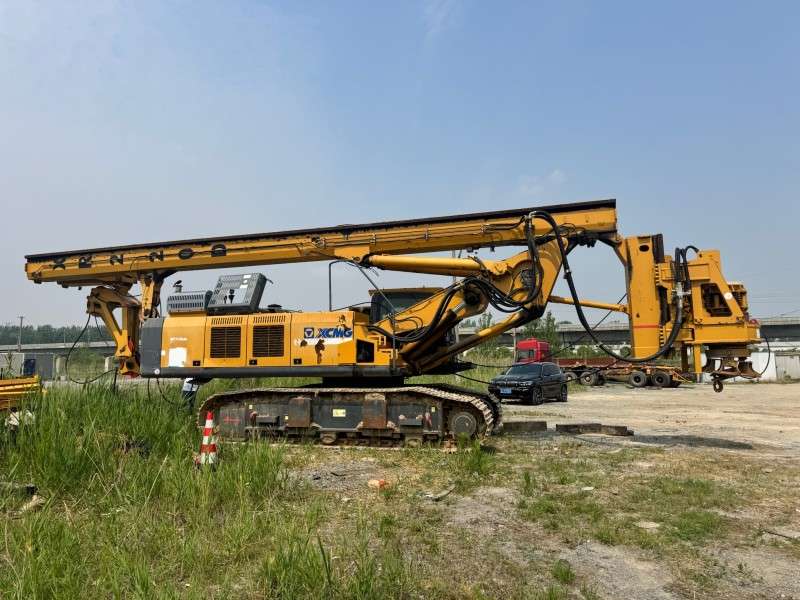
When a piling schedule goes live, cash moves faster than concrete. You are committing to equipment, labor, logistics, and liquidated damages—all while the ground never gets easier. In this reality, a used Kelly bar—properly inspected, refurbished, and matched to your rotary drilling rig—can be the smartest purchase on the project. At JM (Xuzhou Jiuman Machinery), we build new interlocking Kelly bars and friction Kelly bars, but we also maintain a deep pipeline of used/second-hand Kelly bars because many customers ask for performance without the new-price premium. This article explains, in plain engineering terms, where the value comes from and how to capture it without compromising safety or productivity.
Throughout, we use practical language familiar to crews running XCMG XR-series, SANY SR-series, ZOOMLION, or BAUER BG-series rigs. If you are searching for #kellybar, #interlockingkellybar, #frictionkellybar, #usedrotarydrillingrig, #useddrillingrigsales, #foundation, #piling, or #kellybarsales, this is written for you.
1) Value Where It Matters: Cash Flow, Lead Time, and Measured Performance
A used Kelly bar is not a compromise if you buy it for clear, measurable reasons.
Cash flow that fits the job.
Many urban or mid-scale infrastructure packages run on tight margins. Deploying a second-hand Kelly bar can free budget for pile testing, spare parts, or contingency equipment. Because bars are durable assets, a carefully selected used unit lets you buy the performance class you actually need instead of stretching for a new bar that ties up capital without improving cycle time.
Lead time that protects the schedule.
New custom bars sometimes require longer production windows. A stocked used Kelly bar—already staged and inspected—can often be packed with our four-layer export wrap and front/rear steel frames within days, routed via Shanghai, Lianyungang, or Qingdao to match your payment date and vessel schedule. For bidders who win fast and mobilize faster, that delta is the difference between hitting the first pour and missing it.
Measured, not guessed, performance.
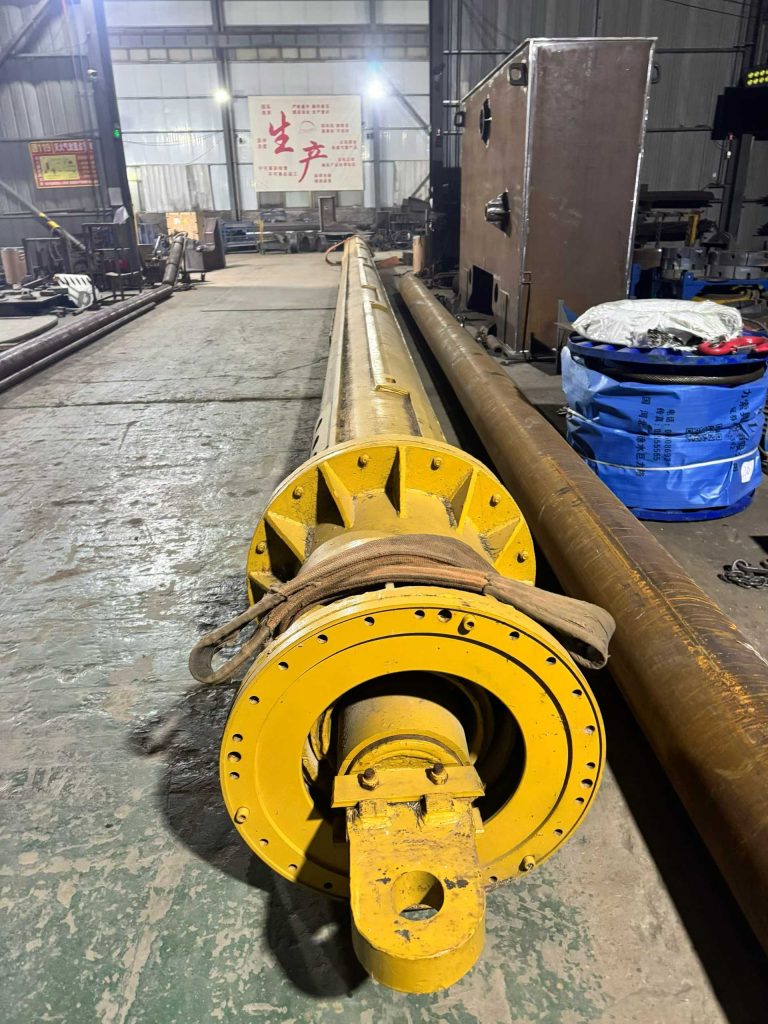
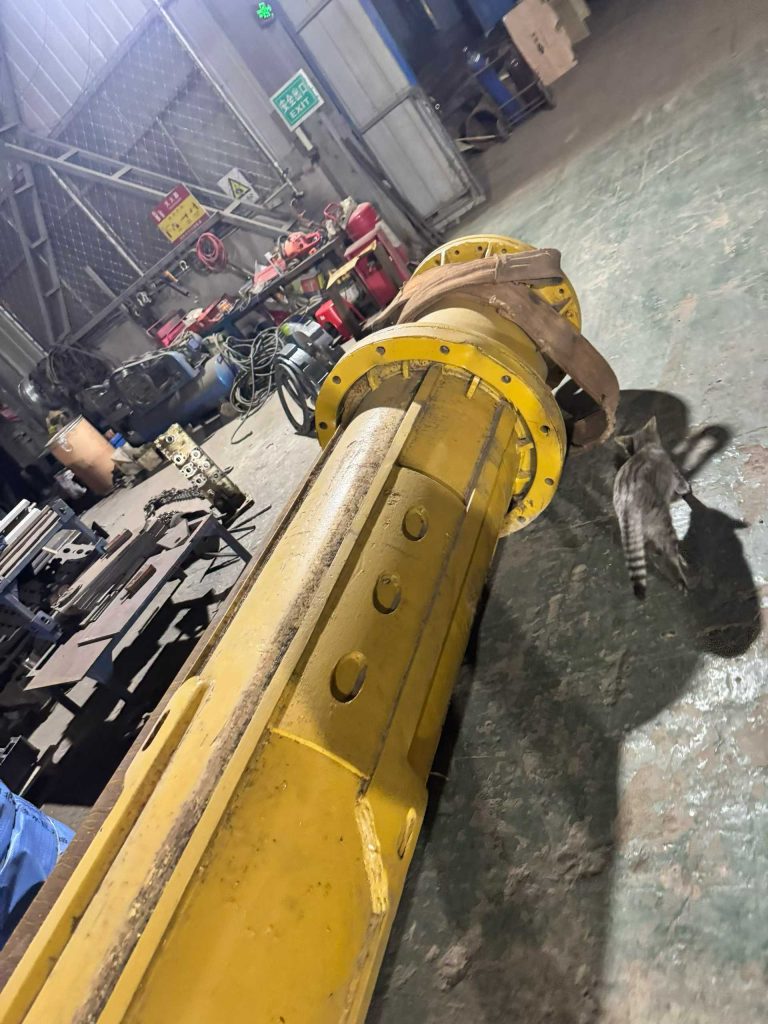
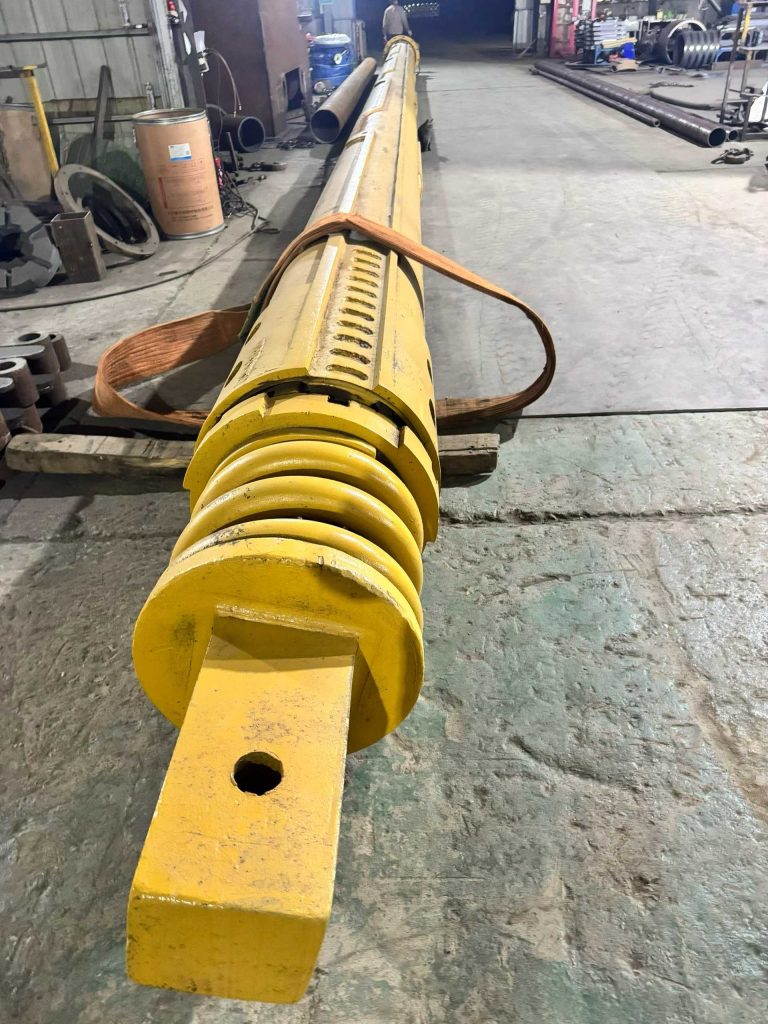
We grade used bars by the mechanical realities that matter on site: lock engagement depth and consistency, telescoping smoothness, straightness, concentricity at the joints, and the condition of pressure plates, key strips, wear plates, and drive adapter. If the bar passes these checks, the rig will feel it immediately—clean lock-up and predictable telescope are what operators call “good personality.” That’s what turns torque into meters.
2) Engineering Over Cosmetics: How JM Evaluates and Refurbishes Used Kelly Bars
A used Kelly bar is only as good as the work done before it arrives. JM’s process mirrors how we build new JS-series interlocking and MZ-series friction bars, adapted for refurbishment.
Full intake and cleaning.
We begin with disassembly and deep cleaning so mud, fines, and past weld spatter do not hide problems. Paint does not earn a grade—mechanics do.
Dimensional and functional checks.
We check straightness and concentricity of tubes, measure telescoping clearances, and verify lock-tooth geometry with gauges. The outer section receives special attention because it carries both torque and environmental exposure. If we see uneven wear patterns or ovality, we correct or reject the part.
Critical interfaces rebuilt, not disguised.
Pressure-plate seats are resurfaced; pressure plates are replaced as needed and preloaded. Key strips are inspected for hardness/condition and welded under controlled procedures where replacement is required, followed by stress relief where applicable. Wear plates are placed where field experience says they pay back—around lock housings and guide lines that meet sand-bearing slurries.
Drive adapter and coupling geometry.
We match the drive adapter to the target rig—XCMG, SANY, ZOOMLION, BAUER—including key dimensions (box size, bolt circle, depths). This is not a cosmetic ring; it is the handshake between rig and bar. Getting it right prevents micro-slip and saves bearings and seals upstream.
Full-stroke test and lock engagement verification.
Every refurbished interlocking bar runs on a stand for multiple full-stroke cycles. We listen for abnormal sounds, feel for mid-stroke “stick-slip,” and confirm lock depth through the stack. Only when the bar locks decisively and telescopes smoothly do we rate it as ready. Friction bars receive the same attention to straightness and surface condition to keep the telescope predictable.
Traceability and documentation.
Each bar leaves with an inspection sheet listing measured values, parts replaced, and notes for the receiving crew. Practical paperwork saves time: your lead operator can read lock depth, check the preload, and start drilling without guesswork.
3) Matching Used Bars to Real Rigs and Real Ground
No Kelly bar works in a vacuum. A used bar must fit the rig torque window, the mast and crowd system, and the ground profile.
Interlocking vs. friction—pick by ground, not habit.
If your work is clean sands and longer piles, a friction Kelly bar saves weight and telescopes faster. If your scope includes mixed strata, dense sands, mudstone, or rock sockets, an interlocking Kelly bar gives you positive torque transmission without locking hesitation under shocks. Jargon aside, the decision is about how your ground loads the bar.
Torque class and stage/length.
A used JS406 or JS419 interlocking bar that once ran on an XR240E/XR360E remains an excellent match for similar rigs and pile windows. We can re-stage or adjust length segments where the mast allows, but we never force a bar to be something it isn’t. The goal is to align the bar’s mechanical sweet spot with your torque and crowd.
Compatibility with SANY, XCMG, ZOOMLION, BAUER.
JM keeps adapter and coupling libraries for the common platforms. When you tell us “SR-series, XR-series, BG-series,” we translate that into dimensions, lock geometry expectations, and clearances. The result is a used bar that feels native to your rig.
Tropical and coastal jobsites.
Used bars bound for Southeast Asia or other humid markets receive extra attention on coatings and packaging: dual protective films over primer, bubble wrap for vibration, an outer tarpaulin against water and sun, and steel frames with rubber pads at both ends. That’s how you keep a good lock face from turning into a rusty mystery after a week on the quay.
4) Total Cost of Ownership: Where the Math Favors a Used Kelly Bar
Purchase price is only one line. A used Kelly bar’s advantage shows up across the whole cost curve.
Acquisition and mobilization.
A quality used bar typically costs less and ships faster. You reduce interest or lease exposure and you gain calendar days—often the scarcest currency on a piling job.
Uptime and spares.
Because we ship used bars with matched spare-parts kits (pressure plates, key strips, retaining rings, drive adapter hardware), your first months on site are protected. When an operator reports a softer lock feel, the fix is on the shelf—not 4,000 miles away. The perceived risk of “used” becomes a managed maintenance plan.
Resale value.
A used bar bought right and maintained with records retains a meaningful resale number. When your program ends, you have an asset to monetize. Contractors who track total cost per installed meter often find the used bar produced the lowest cost per productive hour, including exit value.
Sustainability without the buzzwords.
Re-using steel and extending life by refurbishment is the most concrete form of sustainability in our sector. You reduce embodied energy and shipping footprint compared with ordering new steel for every job. That is good engineering sense, not marketing.
5) Risk Management: What to Check Before You Say Yes
Used does not mean uncertain—if you inspect what matters.
Straightness and telescope feel.
Stand the bar and cycle it. You are looking for smooth, repeatable motion without hang-ups at the same stroke points. Any “memory” (hesitation at identical positions) signals geometry that needs attention.
Lock engagement and pressure-plate contact.
With interlocking bars, ask for measured lock depth and proof of contact across the pressure-plate surface. Poor contact means heat and slip later. We show both readings in our inspection sheets.
Key strips and wear plates.
Visually clean strips hide nothing. Check that hard-facing or replacements were done under procedure, then dressed correctly. On outer sections—the most abused surfaces—wear protection should be present in the zones that meet slurry and sand.
Drive adapter and couplings.
Tolerances at the top drive are non-negotiable. If an adapter looks “almost right,” it is wrong. We machine or replace adapters to the rig’s specification and verify hole patterns, depths, and faces.
Documents that a foreman can use.
Insist on straightforward as-shipped measurements, parts replaced, and torque/crowd windows. Thick manuals are fine, but the one-page sheet is what the night shift reads.
If any of these checks are missing, treat the bar as a candidate for full refurbishment—not as plug-and-play.
) How a Used Kelly Bar Fits into a Complete JM Package
The best result comes when the used bar is part of a system.
Used rotary drilling rigs + used/new Kelly bars.
JM supplies inspected used rotary drilling rigs and second-hand rotary drilling rigs alongside new or used Kelly bars. Many customers combine a refurbished XCMG XR240E/XR360E with a used JS-series interlocking bar tailored to their piles. This pairing protects capex and delivers production. If you already own an SR-series or BG-series rig, we adapt the bar to your fleet.
Commissioning and training.
On arrival, your crew gets practical guidance: lock depth checks, telescope cycles, and early-life maintenance intervals. The purpose is not ceremony—it’s to start drilling on day one.
Service and parts continuity.
JM’s Comprehensive Support System covers technical consultation, 24/7 after-sales response, and a parts supply chain with pre-stocking and emergency channels. For bars and rigs working in distant or tropical sites, predictability is everything; we plan around your delivery date, payment schedule, and vessel cut-off so the right items move at the right time.
Short Case Vignettes (What Customers Actually See)
Mixed urban ground, Southeast Asia.
A contractor paired a refurbished XR360E with a used JS406-4×15 interlocking Kelly bar. Initial hesitation mid-stroke was traced to pressure-plate preload; after adjustment, lock-up became immediate and daily production stabilized. The used bar’s lower acquisition cost funded an on-site spares kit that saved two stoppages in the first month.Coastal job with tight mobilization.
A metro project needed a friction Kelly bar for long sandy piles within two weeks. A used bar from JM stock shipped with four-layer packaging and steel frames, cleared easily at the port, and started work a day after arrival. The crew kept meters steady with short, regular clean cycles—exactly the behavior the bar excels at.Rock socket scope extension.
Mid-project, the client hit denser layers than bid. We swapped their friction bar for a used JS419 interlocking bar matched to the rig’s torque window. With the correct lock geometry and outer-section wear protection, the team moved through the difficult section without abusing the drive.
Practical Buying Checklist (Field-Friendly)
Define your rig torque window and ground profile; decide interlocking vs. friction by the most punishing layer, not the average.
Ask for the bar’s inspection sheet: straightness, telescope clearance, lock depth, pressure-plate status, key-strip condition, adapter dimensions.
Confirm the spare-parts kit and packaging: pressure plates, key strips, retaining rings, drive adapter hardware, four-layer wrap, steel frames with rubber pads.
Align shipping and payment with port options (Shanghai / Lianyungang / Qingdao) so the bar arrives when your schedule needs it.
On site, run full-stroke cycles and verify lock feel before the first production hole.
Do these five things and a used Kelly bar becomes the lowest-risk, highest-value part of your drilling system.
Talk to us
Send us your rig model, pile diameter/depth, ground notes, and delivery window. We’ll reply with a one-page plan—rig class, interlocking/friction Kelly bar, spares, and a shipping route via Shanghai/Lianyungang/Qingdao that matches your dates. Our job is not to “sell a bar.” Our job is to deliver a complete drilling system that drills the piles you actually have.
Contact JM
Oversea Bussiness Manager | zhenghan.zhang@jmachglobal.com
WhatsApp: +86 188-5216-7087
Email: beverly.liu@jmachglobal.com; wayne.wang@jmachglobal.com; gloria.chong@jmachglobal.com